
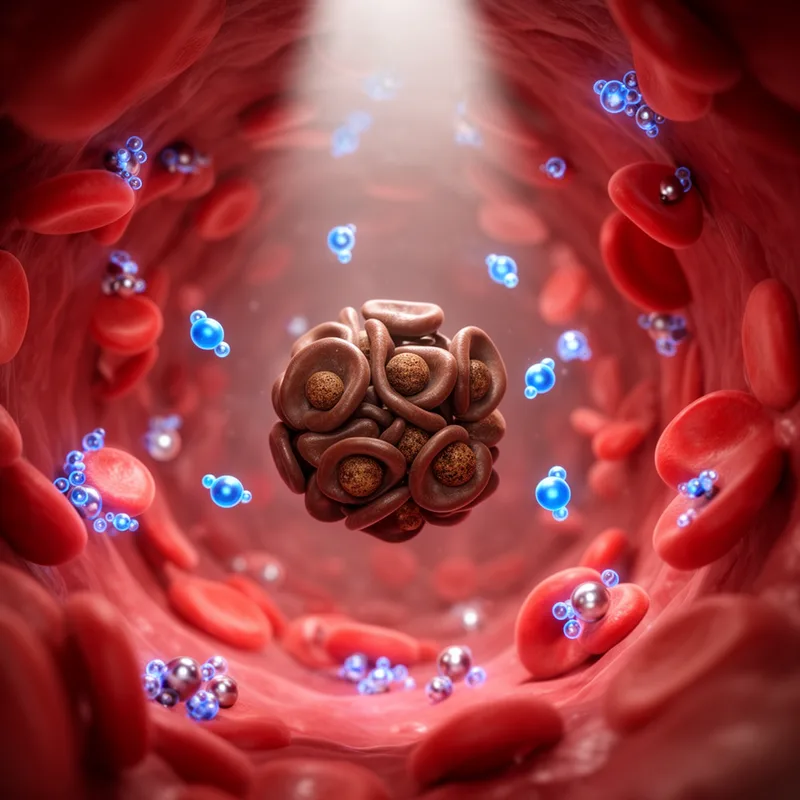
methemoglobin


 1
9.9
- noun
- /ˌmɛθəˈhoʊɡləˌbɪn/
- Specialized
- G6PD deficiency can be identified only by specific laboratory tests for methemoglobin.
Examples
-
A blood methemoglobin level higher than 70% can result in serious cardiac or central nervous system damage.
Academic text (2004) -
The nitrite reacts with hemoglobin to form methemoglobin (Kross et al., 1995; Ayebo, Kross, Vlad, & Sinca, 1997).
Academic text (2006) -
High levels of methemoglobin in the blood can lead to symptoms such as shortness of breath and fatigue.
-
A healthcare professional will monitor the methemoglobin levels of patients exposed to nitrites to ensure proper treatment.
-
When levels of methemoglobin rise significantly, it may indicate exposure to harmful chemicals or medications.
Synonyms
 2
9.1
A substance in blood formed when the oxygen-carrying protein joins carbon monoxide and blocks oxygen delivery
Antonyms

- Specialized
A bright red part of blood that carries oxygen from the lungs to the body's tissues
Surface Forms
Morphology
methemoglobin = hemoglobin (semi-transparent) = met + hemoglobin
The relation to 'hemoglobin' is clear, but the prefix 'met-' signals a specific oxidized chemical state that is specialized and not obvious to average learners.
Etymology
The word methemoglobin comes from meta- meaning 'changed' and hemoglobin, the blood protein that carries oxygen. So methemoglobin is a 'changed' form of hemoglobin that cannot carry oxygen well.