
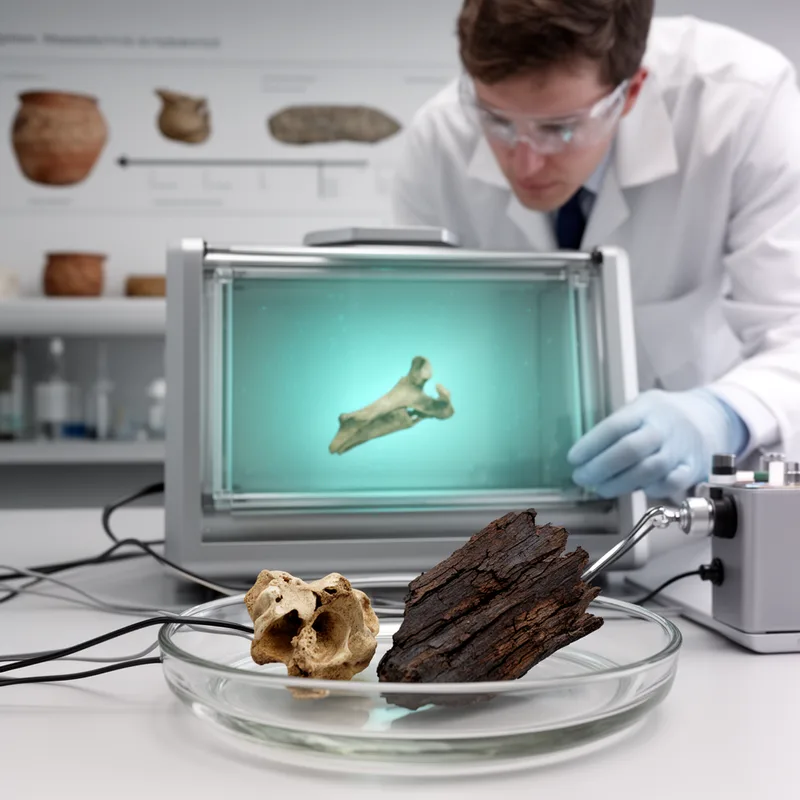
carbon-14 dating


 1
3.9
1
3.9
- noun
- /ˈkɑrbən ˈfɔrˌtīn ˈdeɪtɪŋ/
- Specialized
- used carbon-14 dating
Examples
-
Have you ever heard of carbon-14 dating?
Fiction book (1999) -
In addition, they noted that a carbon-14 dating of carbon particles within the patina performed by a laboratory in Florida had yielded a date of the third century B.C., by which time, it was suggested, the stone lay buried in the rubble around the Temple Mount.
Academic text (2003) -
Scientists often rely on carbon-14 dating to determine the age of ancient artifacts.
-
Using carbon-14 dating, researchers found that the skeleton was over 5,000 years old.
-
Many historians use carbon-14 dating to estimate when prehistoric humans lived in a particular area.
Synonyms
 5
3.8
5
3.8
A way to find the age of old bones, wood, or cloth by measuring carbon-14
 2
4.4
2
4.4
A way to find the age of objects that were once alive by measuring how much carbon-14 they have
Surface Forms
Morphology
carbon-14 + dating
The meaning is directly compositional: 'carbon-14' names the specific isotope used and 'dating' denotes a method for determining age, so the phrase literally means dating by means of carbon-14. The X-dating pattern (dating using X) is regular and cross-linguistically common, so a learner who knows the constituents can infer the MWE's meaning.
Etymology
Carbon-14 dating comes from a method that uses a rare kind of carbon called carbon-14 which slowly disappears from a plant or animal after it dies. Scientists measure how much carbon-14 is left to estimate the object's 'age', so the name links the carbon type with the idea of 'dating' something to find how old it is.