

captivity
 102
3.7
102
3.7

- noun
- /kæpˈtɪvɪti/
- There was evidence here of numberless weeks of captivity by night and by day.
- animals in captivity
- keep in captivity
- held in captivity
Loading YouTube…
Watch on YouTubeThat and they know now that captivity is wrong.
- That and they know now that captivity is wrong.
- These woven stories helped to end the captivity of silence.
- They're very much going after every single dolphin in captivity, basically.
- I think there was also a gorilla that was in captivity.
- I'm not getting anything in a way, they, they kind of find me and I've been essentially in captivity for a while.
- If you're outside the prison, you go through the door in One Direction, you lose your freedom, you enter captivity.
- So if you have animals in captivity like dogs or chipmunks or rodents, hamster, hamsters, mice, how do you feed them a calorie restricted diet?
- He studied wolves and in captivity he noted that wolves are very unlikely to harm each other in spats among members of the same group.
- So in terms of breaking out locks and restraints and captivity.
Examples
-
After being kidnapped for weeks, the reporter was finally freed from captivity.
-
They spent 444 days in captivity.
-
You can tell those people have been in some kind of captivity for the past year.
-
You know, we did not know while he was in captivity that he was held with that group of people.
-
I spent my whole life in captivity of one sort or another.
Fiction book (1995) -
But there is absolutely no reason why there should be more tigers in captivity than in the wild.
-
"When you come from captivity and are thrust into freedom, it's a shock.
Academic text (2011) -
Right now, more than 600 foreign nationals remain in captivity in Somalia.
Academic text (2011) -
The escaped slaves threw off captivity and created a self-reliant subsistence society using available materials.
Academic text (2011) -
The Sultana is a story of endings, the last days of war, the end of slavery, the death of a president, and the end of terrible suffering and captivity.
Synonyms
 370
3.9
370
3.9
Being held by the police after an arrest
 223
5.6
223
5.6
A place or situation that makes someone feel trapped
 155
3.9
155
3.9
A situation in which someone is kept and not allowed to leave, often by police until a decision is made
 88
4.0
88
4.0
Being kept in prison as a punishment by law
 85
8.0
85
8.0
Being kept in prison as punishment
 80
5.9
80
5.9
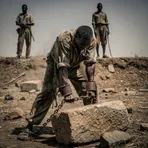
A state of being kept in a small closed space and unable to move freely
 63
3.5
63
3.5
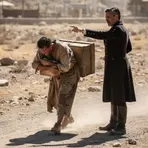
A situation where one person controls another person and they have no freedom
 31
8.9
31
8.9
To be forced to work for and obey another person like a slave
 17
6.3
17
6.3
Being forced to work for someone as their slave
 16
8.6
16
8.6
A state of being controlled and treated like a slave by another person
 15
8.6
15
8.6
Confinement of people in camps during war, often without a trial
 7
6.7
7
6.7
Being held by police or officials for a short time


 1
9.9
1
9.9
Shutting someone inside walls so they cannot leave
Antonyms


Compounds
 1
9.7
1
9.7
A time when the king of Babylon took many Jewish people from Israel to Babylonia after 586 BC
How Confined
- NSFW
17
6.3

- Formal
88
4.0
102
3.7
155
3.9
- Specialized
370
3.9
Surface Forms
Morphology
Etymology
Captivity comes from the old Latin word capere, which means 'to take', and you can see the same idea in capture and captive. So captivity is the state of being 'taken' and kept somewhere, not free.