
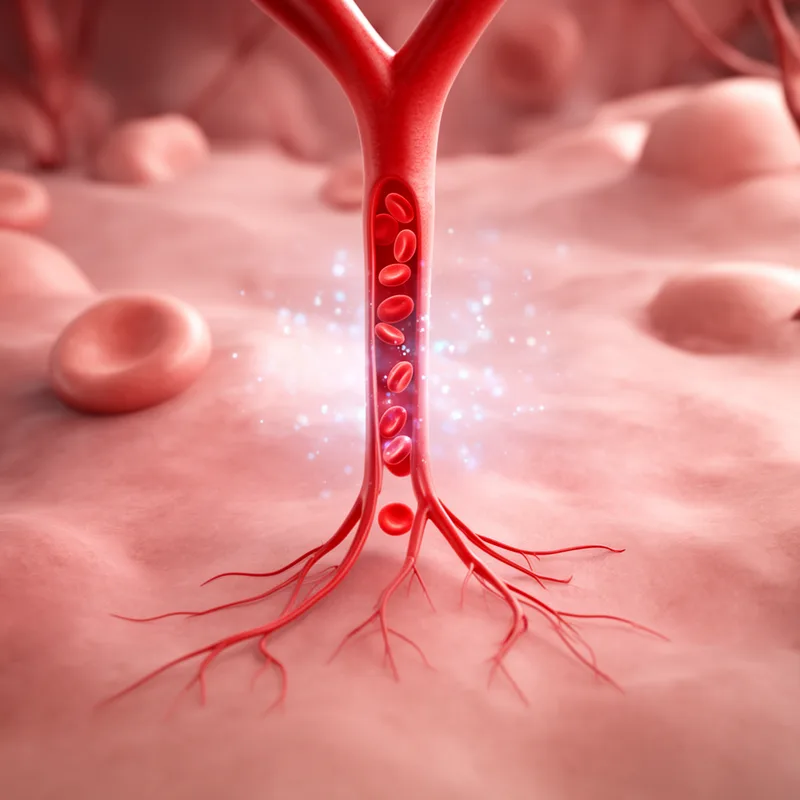
capillary artery
- noun
- /ˈkæpɪˌlɛri ˈɑrɪti/
- Specialized
 :
arteria capilar
:
arteria capilar
- Oxygen diffuses across the thin walls of the capillary artery into surrounding tissues.
Examples
-
The capillary artery is crucial for nutrient exchange.
-
The transition from an arteriole to a capillary artery marks a key change in blood vessel structure.
-
Damage to a capillary artery can result in localized swelling and bruising.
-
Each capillary artery connects to numerous capillaries.
-
Oxygen diffuses across the thin walls of the capillary artery into surrounding tissues.
-
Damage to a capillary artery can result in localized swelling and bruising.
-
Each capillary artery connects to numerous capillaries.
Synonyms

 1
7.7
1
7.7

A small blood vessel that takes blood from an artery to capillaries
A small artery with thin walls that leads to tiny blood vessels called capillaries
How Small

Surface Forms
Morphology
The meaning is directly compositional: 'capillary' (a minute blood vessel) combined with 'artery' (a blood vessel) yields an artery related to or leading to capillaries. This follows regular noun–noun compound formation in medical terminology and a B1 learner who knows both constituents can infer it refers to a small artery associated with capillaries.
Etymology
Capillary artery comes from the parts capillary (a very small tube) and artery (a blood vessel that carries blood from the heart). So a capillary artery is a tiny artery that leads into the even smaller capillaries where 'blood' moves into the body's tissues.