

to cannonade


 1
9.9
1
9.9
- verb
- /ˌkænəˈneɪd/
- Formal
- As the enemy advanced, our soldiers responded by cannonading their ranks from the hilltop bunker.
Examples
-
Rain leached off the roof, and thunder cannonaded down the mountain ranges.
Fiction book (1994) -
Row after row after row from the ring, the crowd is standing and cheering, as he just cannonaded Jake La Motta into a death defeat.
-
As the twenty-foot tide rolled in like a living army, cannonading off the cruel cliffs.
Fiction book (1990) -
Glass shatters, and there's a white, chest-thumping concussion of flash grenades and the sound of all three doors caving in, like four or five breakfronts being cannonaded.
Fiction book (2001) -
The troops began to cannonade the enemy positions at dawn, sending shells flying through the air.
-
During the battle, the general ordered the artillery to cannonade the fortifications relentlessly for hours.
Synonyms
 27
7.9
27
7.9
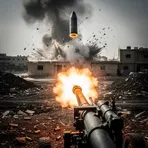
To fire metal containers filled with explosives at a place or people to cause damage
 13
5.4
13
5.4
To attack something repeatedly by throwing things like stones or bombs
To fire a quick series of shots at someone or something
Compounds

How Intense

Surface Forms
Morphology
Etymology
Cannonade comes from cannon 'a big gun' plus the ending -ade that shows an 'action'. So, as a verb, to cannonade means to attack or bombard by cannon over a period of time.