
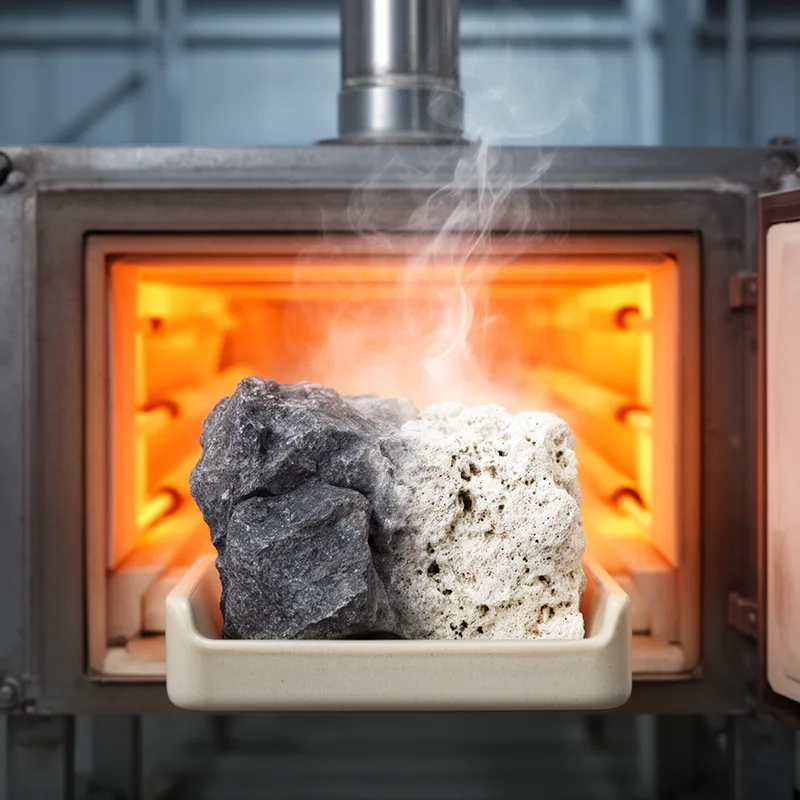
to calcine


 1
9.9
1
9.9
- verb
- /ˈkæl.saɪn/
- Specialized
- The calcined SiO2-TPAOH powder was mixed with TBOT, TPAOH, and deionized water to obtain a molar composition of SiO2: 25; 27; TOOLONG O.
Examples
-
To obtain pure metal from its ore, it is necessary to calcine the material at a high temperature.
-
Before applying the new coating, we must calcine the surface to ensure proper adhesion.
-
Perhaps reduced to calcined bone and teeth.
Fiction book (2000) -
After the catalyst was used five times, the reused catalyst was calcined in air at 550°C for 4 h.
Academic text (2018) -
Either way, your virtues will be preserved, and your errors—moral, theological, prudential—will be calcined away.
Blog text (21) -
The results show that when prepared with different alkali sources and calcined at different temperatures, the properties of SiO2 would affect the textural and catalytic performances of TS-1 materials.
Academic text (2018) -
The sample was calcined in a furnace to remove any remaining moisture before analysis.
Antonyms

Compounds
- Specialized
To heat limestone strongly to make lime by removing carbon dioxide
How Hot
33
7.1

- Specialized
1
9.9
172
1.0
388
1.0
298
1.0
488
1.0
Surface Forms
Etymology
The word calcine comes from the Latin root calx, which means 'lime' or 'limestone' and is the same root you find in chalk and calcium. So to calcine something is to heat it very strongly to drive off unwanted parts or change its makeup.