

bystander
 84
3.4
84
3.4

- noun
- /ˈbaɪˌstændər/
- The bystander witnessed the accident but did not intervene.
- an innocent bystander
- a passive bystander
- bystander intervention
Loading YouTube…
Watch on YouTubeLike if that happens, there's an innocent bystander that comes in and goes to the girl.
- Like if that happens, there's an innocent bystander that comes in and goes to the girl.
- But the bystander may intervene, and she says if he can, if that's morally permissible.
- Those who run organizations usually think of bystanders as either doing nothing or reporting immediately to the authorities.
Examples
-
During the parade, a bystander recorded the performance on their phone.
-
As the fire blazed, many bystanders gathered to see what was happening.
-
Speaking as an innocent bystander, maybe we were tied.
-
But you were an innocent bystander.
-
I am sorry about Frank, but in the big scheme of things, he'll go down as an innocent bystander.
-
I refuse to be a bystander, a silent witness.
-
And yet as private citizens, we are watching and observing and actually being bystanders and allowing this to go on.
-
A few minutes later, campus police pleaded, "For your own safety, all you bystanders and innocent people, leave."
Academic text (2000) -
Civilians are not always mere bystanders and are crucial to any war effort.
Academic text (2002) -
Brownstones looked down on him from all sides, like bystanders at an accident site.
Fiction book (1997)
Synonyms
 123
2.6
123
2.6
A person who watches an event or show without taking part
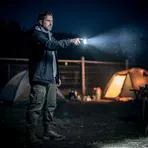 89
3.9
89
3.9
A person who watches a place or people to keep them safe
 24
3.2
24
3.2
A person who watches something without taking part


 1
6.0
1
6.0
A person who does not take part in an activity or event

A person who watches an event without taking part

A person who is present at an event but does not take part
Antonyms

How Involved

Surface Forms
Morphology
Etymology
Bystander comes from the idea of someone who 'stands by' an event: by means 'near' and stand means 'to be on your feet'. So a bystander is a person who stands near and watches without taking part.