
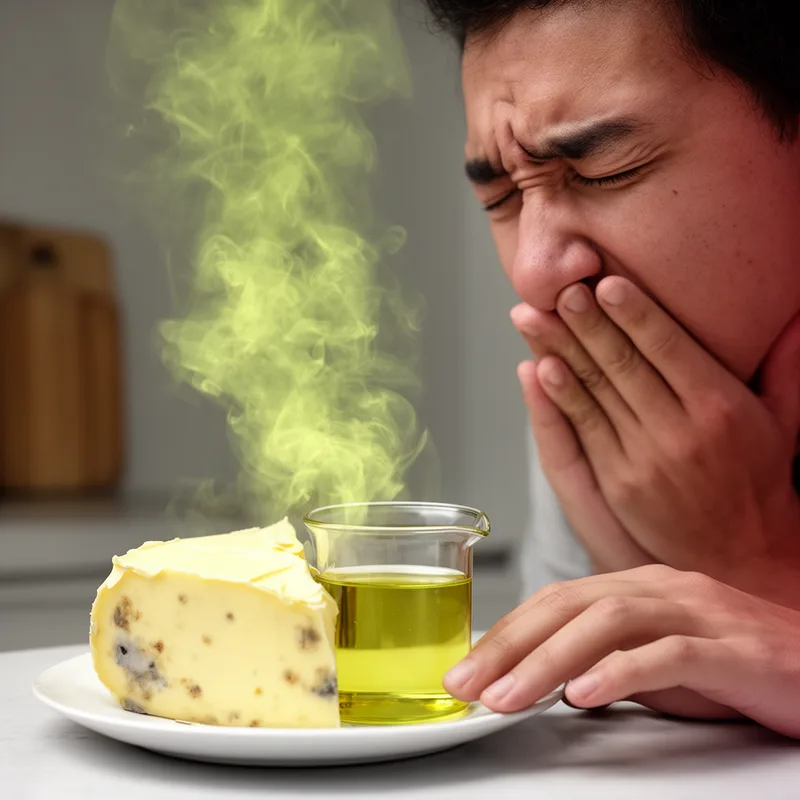
butanoic acid
- noun
- /bjuˈteɪnoʊɪk ˈæsɪd/
- Specialized
- Rancid butter contains high amounts of butanoic acid, which gives it an unpleasant odor.
Examples
-
Cheddar cheese owes some of its distinctive flavor to butanoic acid.
-
During fermentation, butanoic acid can be produced by certain bacteria.
-
The smell of butanoic acid is often described as rancid.
-
Many dairy products contain butanoic acid naturally.
-
Rancid butter contains high amounts of butanoic acid, which gives it an unpleasant odor.
-
During fermentation, butanoic acid can be produced by certain bacteria.
-
Cheddar cheese owes some of its distinctive flavor to butanoic acid.
Synonyms



 1
6.8
1
6.8
An acid in fats that has a very strong unpleasant smell often found in spoiled butter
Surface Forms
Morphology
butanoic + acid
The phrase is morphologically compositional (adjectival chemical name + 'acid') so its basic sense — an acid derived from a four-carbon (butan-) chain — is predictable from the parts for someone familiar with chemical nomenclature. However, this is technical vocabulary and the fuller meaning (a specific fatty acid with a rancid odor found in butter) and the '-oic' naming convention are not obvious to an average B1 learner, making the expression only partially transparent.
Etymology
The noun butanoic acid may come from an old word for 'butter' because people first found this sharp, smelly acid in spoiled butter. That's why the name links the chemical to the strong, unpleasant odor it gives to spoiled fats today.