
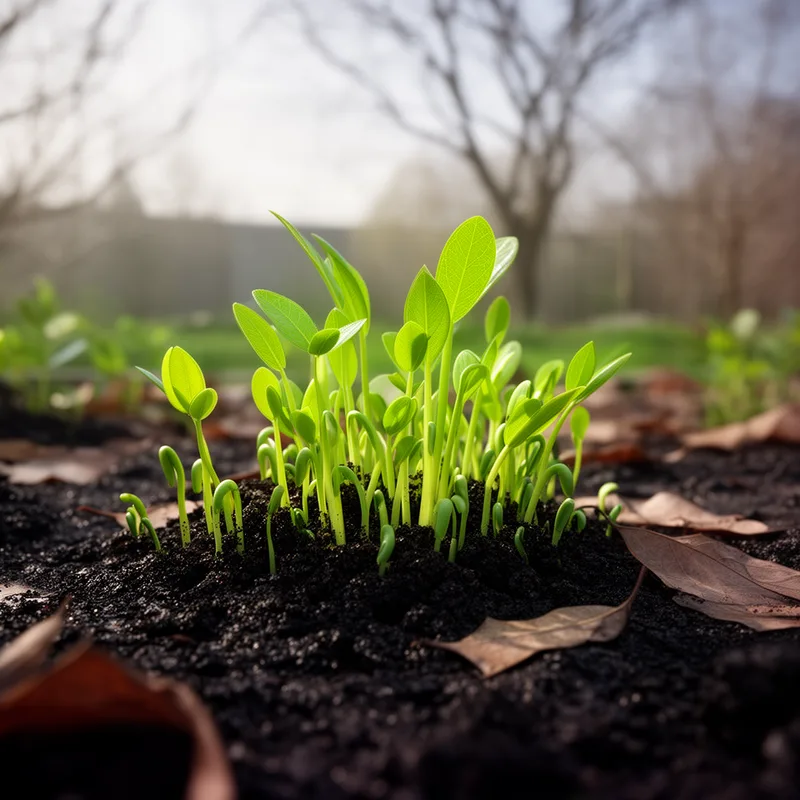
to burgeon forth
- phrasal verb
- /ˈbɜrdʒən fɔrθ/
- In the warm sunlight, the tree branches started to burgeon forth with fresh green leaves.
Examples
-
With the arrival of spring, new flowers began to burgeon forth from the once-bare soil.
-
After the rain, the plants in the garden quickly burgeon forth, filling the air with vibrant colors.
-
This plethora of remedial strategies has burgeoned forth from the theories within broadly defined areas of learning disabilities.
Academic text (1991)
Synonyms

 958
2.2
958
2.2

Start to exist or slowly develop, as with an idea
 68
2.0
68
2.0
To begin to grow new shoots or leaves
 44
3.4
44
3.4
To grow and become more successful or confident
 28
7.6
28
7.6
To grow or increase very quickly
 16
2.8
16
2.8
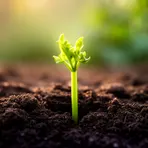
To begin to grow new stems or buds from a plant
 11
1.0
11
1.0
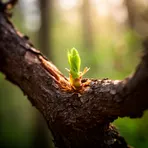
To start to grow as a new shoot on a plant
 10
4.8
10
4.8
To begin to grow from a seed or spore
 1
3.2
1
3.2
To start growing, usually of plants or seeds
 1
3.4
1
3.4
To grow and become more successful or confident
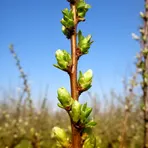
To start to grow quickly, often by forming buds

To grow outward and make many branches so the plant looks fuller

To grow and develop in a clear, positive way
Antonyms


How Quickly

Surface Forms
Morphology
Both constituents directly contribute to the overall meaning: 'burgeon' = to grow/develop rapidly and 'forth' = outward/emerging into notice, so together they mean to begin to grow or sprout and come forth. This compositional verb + particle pattern is regular and cross-linguistically common, so a B1 learner who knows both words should be able to infer the MWE's meaning.
Etymology
Burgeon forth comes from a simple plant picture: burgeon once meant a new bud or shoot pushing out and forth means 'out'. So, it now means 'to begin to grow or develop quickly', like shoots pushing up from the ground in spring.