
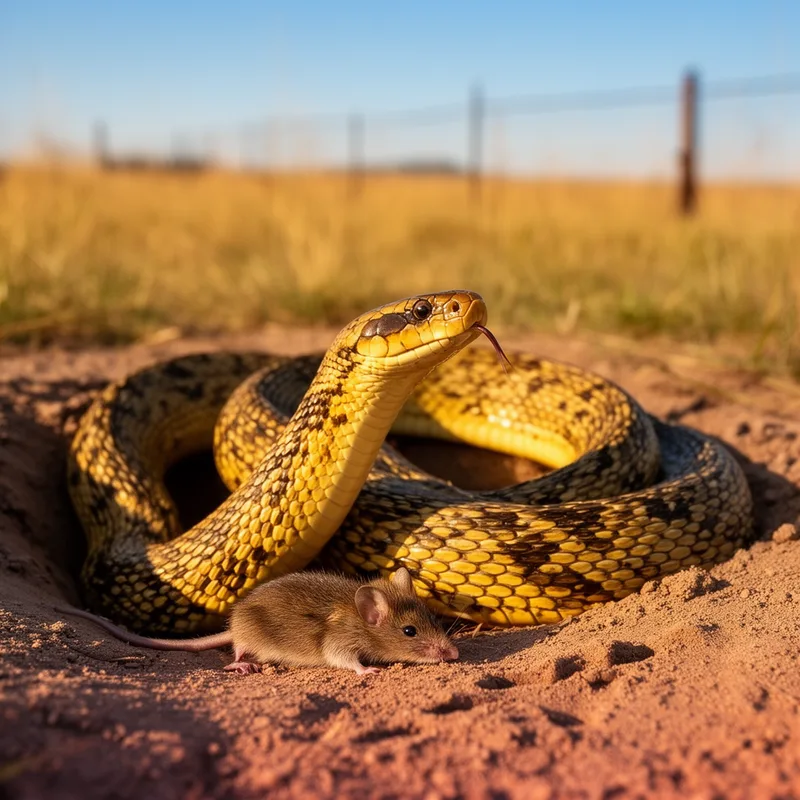
bull snake
- noun
- /bʊl sneɪk/
- US
- The bull snake is often mistaken for a rattlesnake.
Examples
-
Although a bull snake can look intimidating, it is not venomous and is generally harmless to humans.
-
Farmers appreciate the presence of bull snakes in their fields because they eat rodents.
-
A bull snake slithered across the dusty path as we hiked through the grasslands.
-
Many bull snakes can be found in the Great Plains.
-
I encountered a large bull snake sunbathing on the warm rocks during my hike in the desert.
-
The bull snake slithered silently through the tall grass, searching for mice to eat.
-
While gardening, I spotted a bull snake coiled near the compost pile, blending in with the surroundings.
Synonyms


 1
7.0
1
7.0
A large North American snake that is not venomous and lives in burrows eating rodents
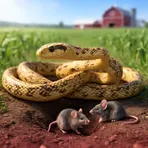
A large harmless North American snake that eats mice and rats and often lives in burrows

A large snake that is not poisonous and eats rodents
Surface Forms
Morphology
bull + snake
The meaning is compositionally derived: 'bull' functions as a modifier of 'snake', so a learner who knows 'bull' and 'snake' can infer this refers to a kind of snake (likely large or robust). This fits common English noun-compounding patterns (e.g. bullfrog) and is therefore readily recoverable by a B1 learner from the constituent meanings.
Etymology
Bull snake may come from what farmers saw: when the big snake puffs up and makes a deep, loud hiss, people thought of a bull, so they called it bull + snake. That's why the name refers to 'a large, harmless snake' often found near farms that helps by eating rats and mice.