
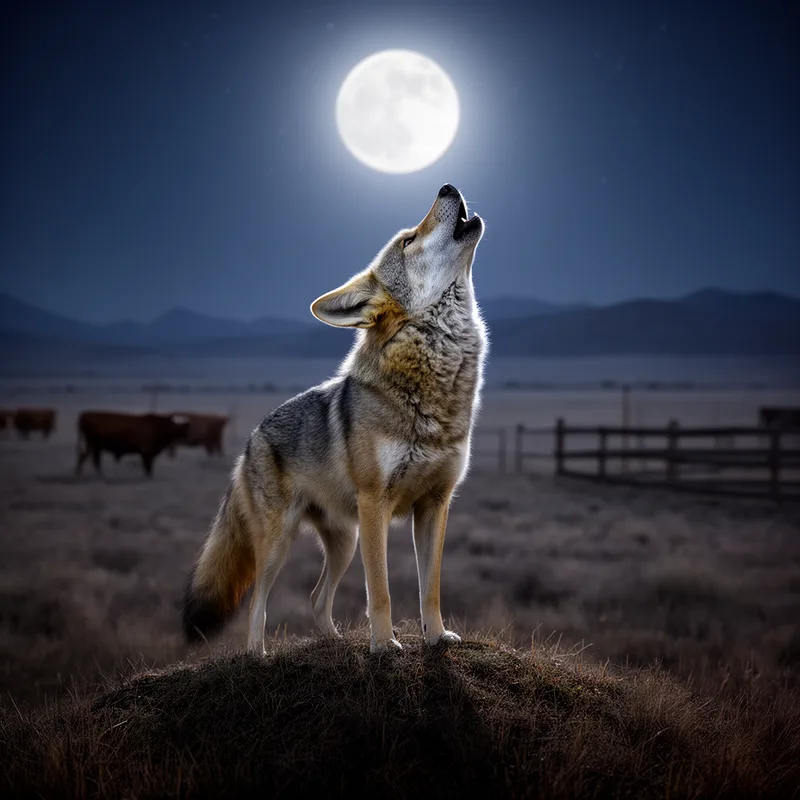
brush wolf
- noun
- /brʌʃ wʊlf/
- US
- The brush wolf is known for its adaptability.
Examples
-
Many brush wolves roam the deserts of Nevada.
-
Early settlers sometimes mistook the brush wolf for a young gray wolf.
-
A brush wolf can often be heard howling on quiet nights in the prairie.
-
The ranchers reported seeing a brush wolf lurking near their cattle at dusk.
-
Brush wolves are known for their adaptability in various environments across North America.
-
The brush wolf is often mistaken for a coyote due to its similar size and appearance.
-
Many people enjoy watching the brush wolf in its natural habitat during outdoor expeditions.
Synonyms

 70
2.8
70
2.8

A small wild dog that lives in North America and often howls


 1
6.0
1
6.0
A small wild animal that looks like a dog from western North America, often called a coyote
A small wild dog from North America called the coyote
Surface Forms
Morphology
The noun-noun compound is directly compositional: 'brush' (a thicket of shrubs) modifies 'wolf', yielding 'a wolf that lives in or is associated with brush/brushland'. This follows productive English compounding patterns, so a B1 learner who knows both words could readily infer it refers to a small canid (i.e., coyote) found in brush.
Etymology
Brush wolf comes from early settlers who saw a small, wolf-like animal living in the thick, low plants called the brush, so they called it a wolf of the brush. That's why brush wolf means 'coyote' today.