

to bounce off
 33
3.4
33
3.4

- phrasal verb
- /baʊns ɔf/
- The children watched as the ball bounced off the wall and rolled back towards them.
- a ball bounced off
- bounced off the edge
Loading YouTube…
Watch on YouTubeI like to use diffuse light where I'm bouncing light off white walls and ceilings.
- I like to use diffuse light where I'm bouncing light off white walls and ceilings.
- It's like tissue paper, but yet these alpha particles are bouncing off something.
- Another beer bottle comes and it bounces off.
Examples
-
I can make this harder by bouncing off of the ground, for instance.
-
The basketball hit the rim and bounced off unexpectedly.
-
You could bounce a quarter off that thing.
-
As you can see, it bounces off and comes back.
-
And it seemed to be almost bouncing off an invisible object.
-
Maybe those little balls are bouncing off each other and creating that pattern.
-
The phone slipped out of my left hand and bounced off the floor.
Fiction book (1993) -
One fell through and bounced simply off the brick floor into the garden.
Fiction book (1994) -
When a sound wave encounters an object, the wave bounces off the object and back to the SONAR device.
Academic text (2013) -
The radiation bouncing off this towering glass structure was melting cars.
Synonyms
 386
1.3
386
1.3
To move quickly away from a surface after hitting it, moving up and down in a springy way
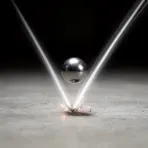 25
7.7
25
7.7
To bounce off a surface at an angle after hitting it
 19
2.9
19
2.9
To spring back after hitting something
 1
4.4
1
4.4
To hit a surface and bounce away
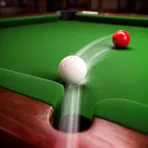

 1
9.5
1
9.5
To bounce off something and move away at an angle
Antonyms

How Bouncy

Surface Forms
Morphology
The meaning 'to rebound or ricochet away from a surface' is directly and transparently derivable from combining 'bounce' (to rebound) with the directional particle 'off' (away from a surface). This motion verb + particle pattern is a standard, compositional construction in English and cross-linguistically common, so a B1 learner who knows both constituents will readily infer the MWE meaning.
Etymology
Bounce off shows a simple picture: imagine a ball that bounces when it hits a wall and then flies off in another direction. That's why bounce off means 'to rebound' from a surface.