
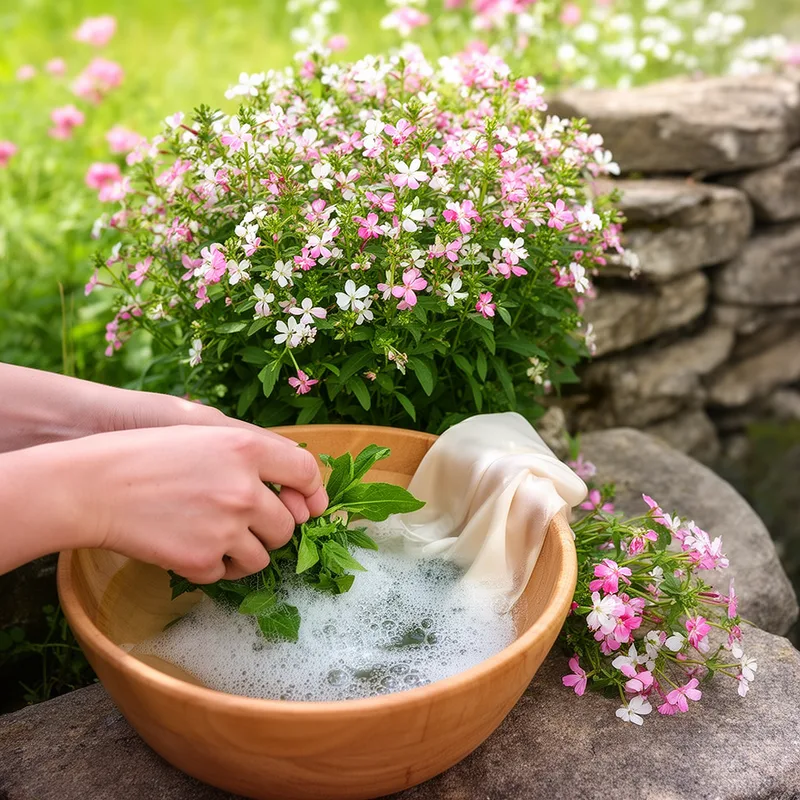
bouncing Bess
- noun
- UK
- Pink blossoms of bouncing Bess brighten the meadows in early summer.
Examples
-
In the past, people used bouncing Bess to wash delicate fabrics because of its natural soap.
-
The gardener pointed out a patch of bouncing Bess growing beside the old stone wall.
-
Look at that bouncing Bess over there!
-
I saw a beautiful bouncing Bess in the garden.
-
In the past, people used bouncing Bess to wash delicate fabrics because of its natural soap.
-
The pink flowers of bouncing Bess attract bees during the summer months.
-
Walking through the garden, I admired the clusters of bouncing Bess that added color to the landscape.
Synonyms


 1
9.9
1
9.9
A plant with pink or white flowers whose crushed leaves make a natural soap
A garden plant with pink or white flowers whose leaves and roots make a natural soap

A plant with pink or white flowers whose crushed leaves make a soap-like liquid

A plant from Europe with pink or white flowers whose leaves make soap when crushed
Surface Forms
Morphology
bouncing + Bess
The constituent words 'bouncing' (energetic) and 'Bess' (a personal name or unanalyzed form) give no semantic cue to a plant or to soap-like properties, so a B1 learner knowing both words would not infer 'soapwort'. This is a lexicalized, likely dialectal plant name whose meaning is historically established rather than compositional, making it unpredictable from its parts.
Etymology
Bouncing Bess may come from the bright flowers that seem to bounce in the wind and from Bess, a common short name for Elizabeth given to plants long ago. One popular story says people used this lively plant as a natural 'soap' to wash delicate clothes, so the name stuck to the soap-producing herb we now call soapwort.