
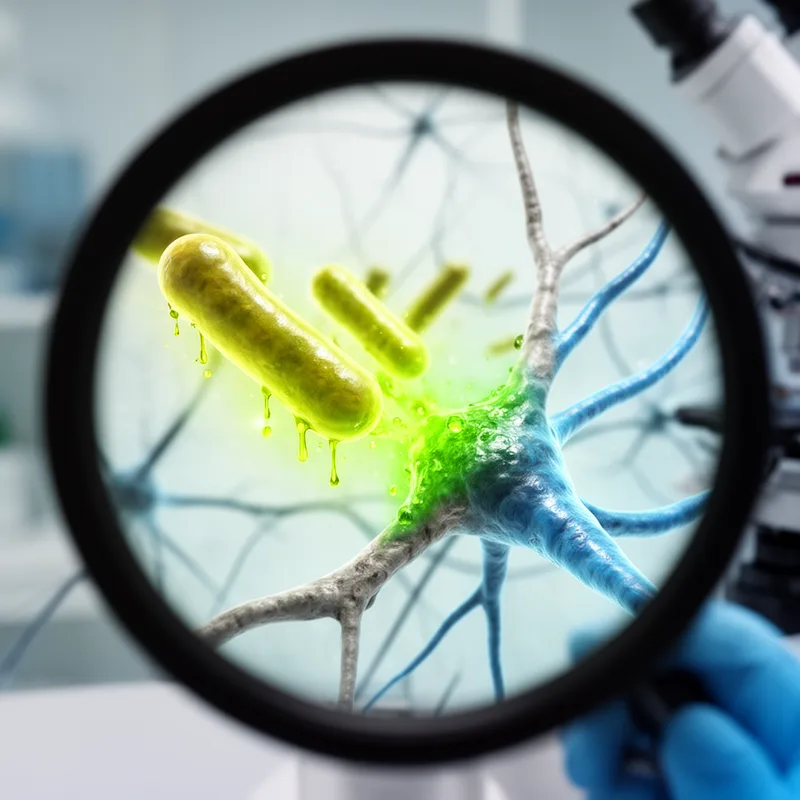
botulismotoxin
- noun
- /ˌbɑːtʃəˈlɪzməˌtɒksɪn/
- NSFW
- Botulismotoxin is considered one of the most poisonous biological substances known to science.
Examples
-
Accidental exposure to botulismotoxin can lead to severe and sometimes fatal illness.
-
The laboratory studied how botulismotoxin affects nerve function in mammals.
-
The botulismotoxin is dangerous.
-
Many scientists study botulismotoxin.
-
Botulismotoxin is one of the most potent toxins, often used in medical treatments for its ability to block nerve signals.
-
Accidental exposure to botulismotoxin may result in serious health complications, including paralysis.
-
Researchers are investigating the effects of botulismotoxin on muscle movement and its potential therapeutic uses.
Synonyms

 140
5.3
140
5.3

A poisonous substance that some animals, plants, or bacteria make
 3
7.9
3
7.9
A poisonous substance made by a living thing like a plant, animal, or germ
 1
9.9
1
9.9
A very strong poison made by bacteria that causes deadly food poisoning


 1
7.5
1
7.5
A very strong poison made by bacteria that stops muscles from working and that doctors use to relax them
 1
3.9
1
3.9
A poisonous substance made by bacteria that they release or keep inside their cells

A dangerous poison made by bacteria that stops muscles from working and can kill, used in tiny medical doses

A medicine made from germs that relaxes muscles to treat muscle tightness and reduce wrinkles

A poison some bacteria make and send out from their cells
How Toxic

Surface Forms
Morphology
Etymology
Botulismotoxin comes from two parts: botulism, from Latin botulus meaning 'sausage' because the illness was first linked to bad sausages, and toxin, from the root tox- meaning 'poison', as in the word 'toxic'. So botulismotoxin can be remembered as a kind of 'sausage poison', which fits its modern meaning as a very strong toxin made by bacteria.