
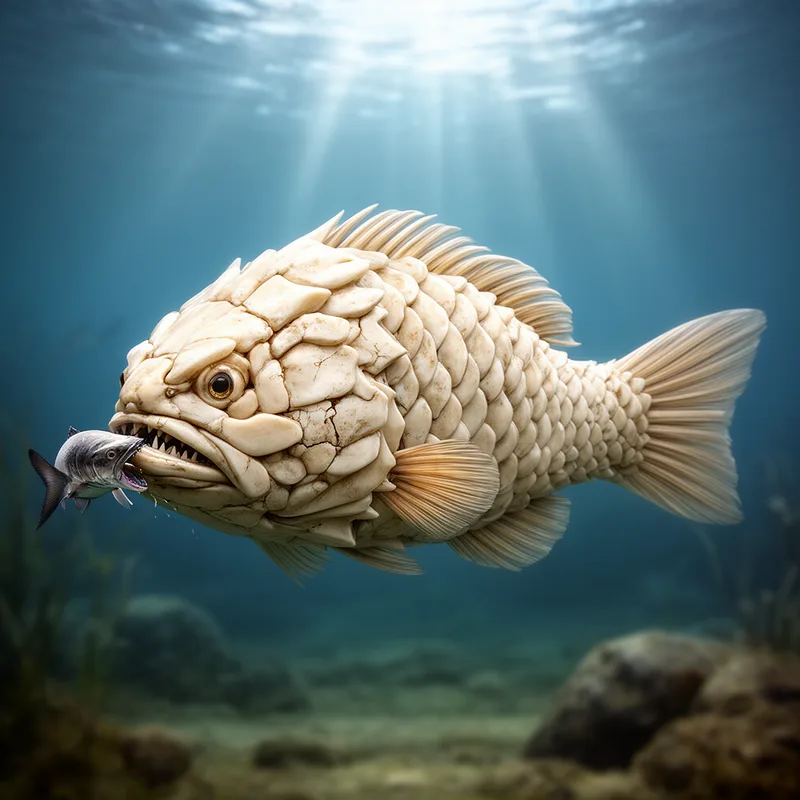
bone-covered
- adjective
- The ancient fish was bone-covered, protecting it from most predators.
Examples
-
Scientists discovered a bone-covered fossil species that lived in the Devonian period.
-
The bone-covered armadillo looks quite unique.
-
Many armadillos are not truly bone-covered, but their shells resemble bony armor.
-
Some fish are bone-covered, providing them with extra protection.
-
The ancient fish was bone-covered, protecting it from most predators.
-
Many armadillos are not truly bone-covered, but their shells resemble bony armor.
-
Some fish are bone-covered, providing them with extra protection.
Synonyms

 5
4.4
5
4.4

Having a natural hard covering like plates or shells for protection
 2
5.3
2
5.3
A vehicle or object with thick metal on the outside to protect against attack


 1
1.9
1
1.9
Having a hard outer covering like a crab or nut
 1
3.6
1
3.6
Having a hard outer covering that protects what is inside, like a crab or nut
 1
7.2
1
7.2
Covered with heavy metal plates for protection

A body covered in hard plates made of bone for protection

Wearing metal armor for protection
Surface Forms
Morphology
Etymology
Bone-covered comes from two common English words: bone 'the hard part inside an animal' and cover 'to put over or protect'. So, something bone-covered has a layer of bone on the outside like natural 'armor', which is why it keeps the animal safe.