
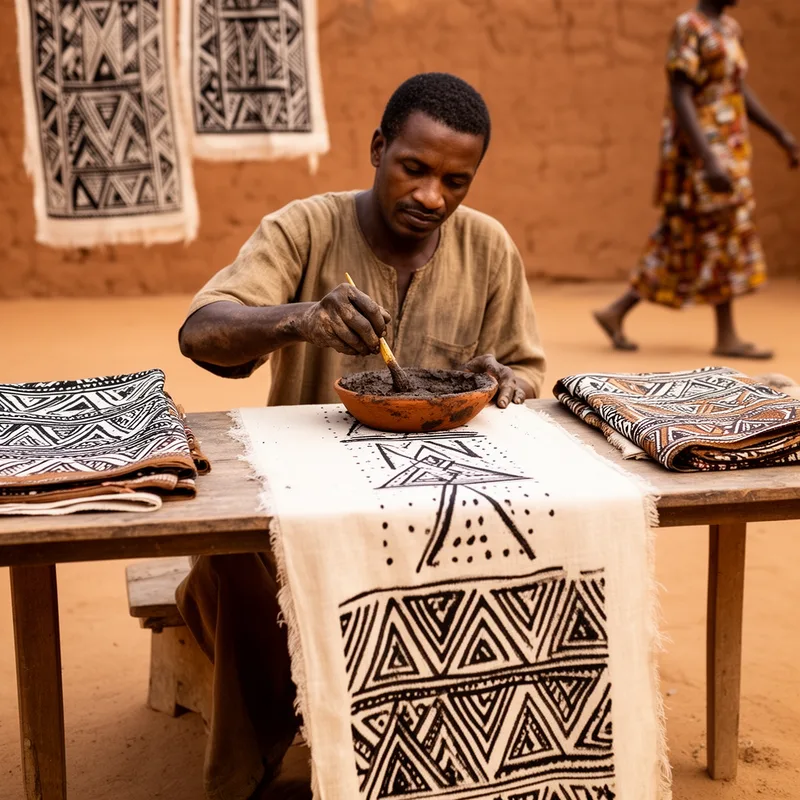
bogolan
- noun
- The technique by which tourist-market bogolan is made differs from the painstaking traditional methods.
- bogolan clothing
- bogolan paintings
- bogolan technique
Examples
-
Several other artists in Bamako have experimented with bogolan, creating new vegetal and mineral dyes and new methods of application.
Academic text (1997) -
Niale designs and paints his own bogolan jackets and shirts, which he frequently wears on stage (Fig. 19).
Academic text (1997) -
His reasons for working solely with bogolan center on issues of national identity.
Academic text (1997) -
In this second type of bogolan, the cloth is stretched and hung like a canvas.
Academic text (1997) -
Two distinct types of bogolan clothing, both rooted in bogolanfini, are being produced in the capital.
Academic text (1997) -
In Bamako, bogolan is both an expression of national pride and a response to economic exigencies.
Academic text (1997) -
Consequently, some of these young Malians have begun producing bogolan for sale in the tourist market and elsewhere.
Academic text (1997) -
My interviews with expatriate purchasers of bogolan indicate that these are among the characteristics that draw them to the cloth.
Academic text (1997) -
For the makers of contemporary bogolan, compositional rather than thematic concerns may dictate the placement of designs.
Academic text (1997) -
The artist displayed beautifully crafted pieces of bogolan that highlighted the traditional patterns of Mali.
Synonyms


 1
9.9
1
9.9
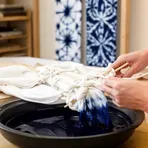
A Japanese way of dyeing cloth by folding, twisting, or tying it to make patterns
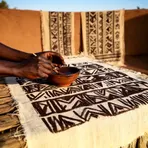
A cotton cloth from Mali dyed with mud to make patterns that often have meaning
How Patterned

Surface Forms
Etymology
Bogolan comes from the Bambara name bogolanfini, where bogo means 'mud' and fini means 'cloth'. This fabric is dyed with fermented mud, so the name literally means 'mud cloth' and explains both the material and the way it is made.