
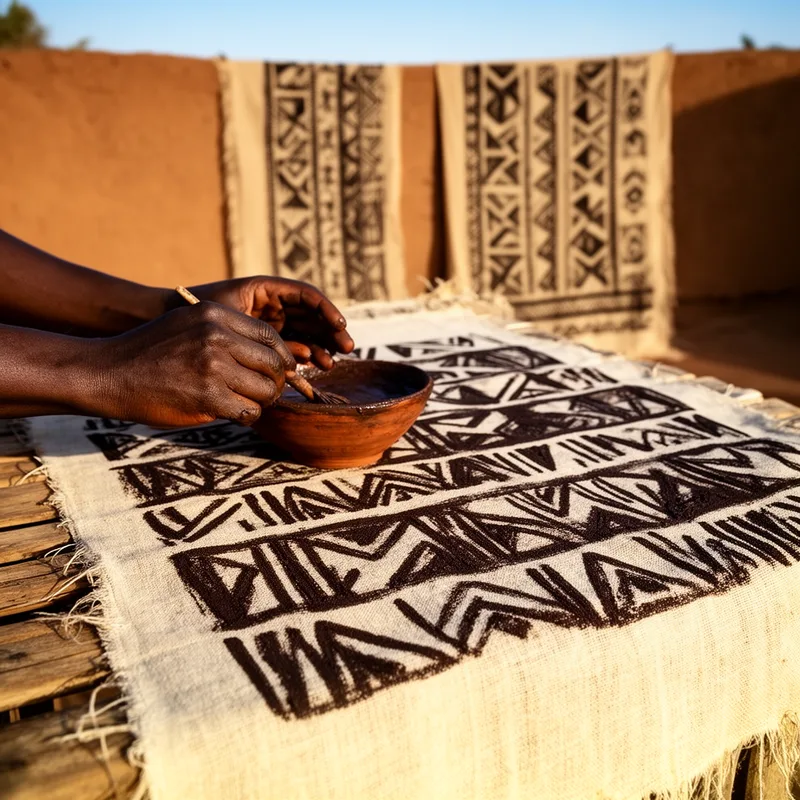
bogolanfini
- noun
- Craftsmen in Mali create bogolanfini by dyeing cotton cloth with fermented mud, resulting in unique decorative textiles.
- Malian bogolanfini
- bogolanfini cloth
- traditional bogolanfini
Examples
-
In the villages, bogolanfini serves as clothing for women and hunters, and it may play important ritual roles.
Academic text (1997) -
The palette—black or brown designs on white, yellow, or red cloth—is that of bogolanfini.
Academic text (1997) -
Two distinct types of bogolan clothing, both rooted in bogolanfini, are being produced in the capital.
Academic text (1997) -
Since the introduction of European textiles, bogolanfini has been worn less frequently.
Academic text (1997) -
In fact, it may have been in the form of clothing that bogolanfini was first revitalized in Bamako.
Academic text (1997) -
The Groupe's chief concern is with preserving knowledge of bogolanfini designs and techniques.
Academic text (1997) -
Today, bogolan appears in a wide variety of social contexts, few of which relate to bogolanfini's traditional uses.
Academic text (1997) -
Another installation shows the transformation of Malian mudcloth (bogolanfini) into an international symbol of African identity and a universally recognized graphic style.
Academic text (2001) -
Some bogolanfini motifs form a secret, esoteric text while Bafodea hu ronko motifs lack secret meanings.
Academic text (2007) -
The artist displayed a vibrant piece of bogolanfini featuring intricate patterns that represent cultural stories.
Synonyms
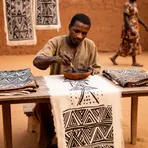
A traditional cloth from Mali dyed with mud to make patterns and the way people make it
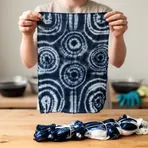
A piece of cloth dyed by folding, twisting, or tying it to make patterns
How Patterned

 62
4.1
62
4.1

Surface Forms
Etymology
Bogolanfini comes from the Bambara language and literally means 'mud cloth', with bogo meaning 'mud' and fini meaning 'cloth'. So a bogolanfini is a cotton cloth dyed with fermented mud and decorated with patterns that often tell a story.