
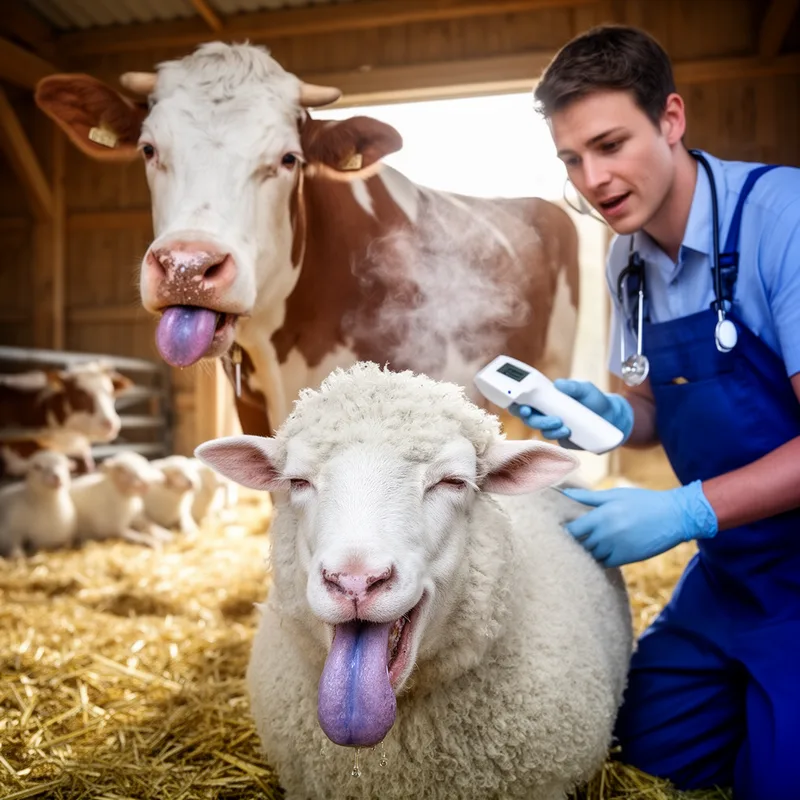
bluetongue disease


 1
6.9
- noun
- /ˈbluːˌtʌŋ diˈziːz/
- Specialized
- Farmers were advised to vaccinate their sheep against bluetongue disease after recent cases in the region.
Examples
-
The veterinarian confirmed that several cattle had contracted bluetongue disease during the outbreak.
-
Symptoms of bluetongue disease include swelling of the tongue and difficulty breathing in infected animals.
-
The farmer reported an outbreak of bluetongue disease last week.
-
Many sheep were affected by bluetongue disease this summer.
-
Farmers were advised to vaccinate their sheep against bluetongue disease after recent cases in the region.
-
Symptoms of bluetongue disease include swelling of the tongue and difficulty breathing in infected animals.
-
The veterinarian confirmed that several cattle had contracted bluetongue disease during the outbreak.
Synonyms
 1
9.0
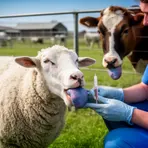
A disease of sheep and cattle caused by a virus that makes the tongue and lips swell and causes fever
Surface Forms
Morphology
This is a straightforward compositional noun phrase: 'bluetongue' is the name of a specific viral condition and adding the general noun 'disease' simply denotes that condition. The pattern 'X disease' is a common, cross-linguistically transparent way to name illnesses, so a learner who knows both constituents will readily infer the meaning.
Etymology
Bluetongue disease comes from a clear sign: the tongue of sick sheep and cattle can swell and look blue. So the name refers to a 'disease' of livestock that causes fever, swelling and that blue-looking tongue.