
bluetongue


 1
9.0
- noun
- /ˈbluːˌtʌŋ/
- Specialized
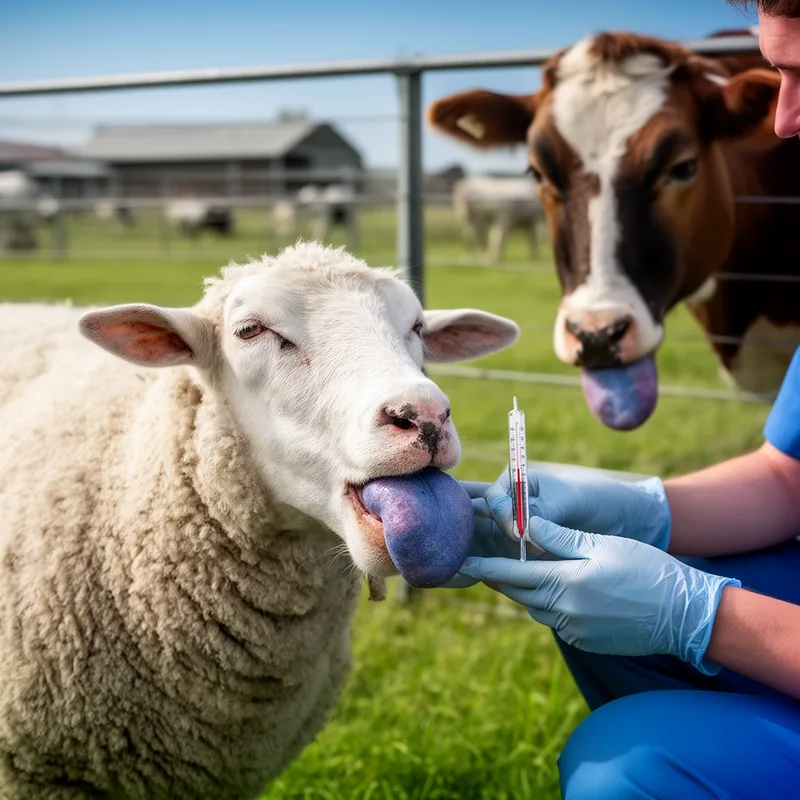
- A sheep with bluetongue can develop swollen lips and tongue.
- Bluetongue virus
- Bluetongue virus strains
- disease bluetongue
Examples
-
The insects are biting midges, Culicoides variipennis, that transmit bluetongue.
Academic text (1995) -
While less than 5 percent of infected U.S. sheep die, bluetongue strains in other countries can cause much higher mortality.
Academic text (1999) -
Insect transmission of Bluetongue virus.
Academic text (1995) -
Twenty-four different strains of the bluetongue virus have been identified.
Academic text (1999) -
The lice carried the bluetongue virus, which killed 70 percent of Egypt's livestock.
-
DNA fingerprinting is being used to identify insects that can spread bluetongue viruses among ruminant animals.
Academic text (1995) -
The midges that transmit bluetongue can also spread EHD.
Academic text (1999) -
For U.S. livestock producers, virus-caused bluetongue is one of the most important of these vector-borne diseases.
Academic text (1999) -
The Office of International Epizootics in Paris, France, classifies bluetongue as "List A," meaning it's a disease that spreads rapidly and crosses international borders.
Academic text (1999) -
A sheep with bluetongue can develop swollen lips and tongue.
Synonyms
 1
6.9
A virus infection of sheep and cattle that makes the tongue swell and causes fever
Compounds
- Specialized
1
6.9
A virus infection of sheep and cattle that makes the tongue swell and causes fever
Surface Forms
Etymology
Bluetongue comes from the simple image of an animal whose tongue turns blue ('dark and swollen') when it is very sick. That's why bluetongue names a viral disease of sheep and cattle that is spread by small biting flies.