

blue elder
- noun
- /blu ˈɛldər/
- US
- We found a blue elder growing by the stream, heavy with ripe berries.
Examples
-
The blue elder blooms in early summer with clusters of fragrant white flowers.
-
Local wineries use blue elder fruit to produce unique berry wines.
-
The blue elder grows abundantly in California.
-
Have you ever tasted blue elder jelly?
-
Local wineries use blue elder fruit to produce unique berry wines.
-
The blue elder blooms in early summer with clusters of fragrant white flowers.
-
We found a blue elder growing by the stream, heavy with ripe berries.
Synonyms
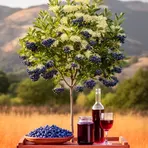
A shrub or small tree with white flowers and blue berries used for jams and wines
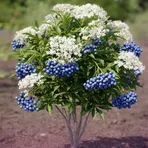
A small tree or shrub with white flowers and clusters of blue berries
Surface Forms
Morphology
The noun phrase is transparently composed: 'blue' names the colour/appearance and 'elder' names the Sambucus shrub, so the phrase denotes an elder plant with blue-coloured berries or appearance. This is a straightforward adjective + noun botanical description common across languages, so a B1 learner who knows both constituents would readily infer the meaning.
Etymology
Blue elder gets its name from the plant word elder, used for shrubs that make berries, and from the blue colour of its fruit, which gives a clear picture to remember. That's why Blue elder now refers to a 'shrub' or small tree with white flowers and blue berries whose fruit people use to make wines and jellies.

