
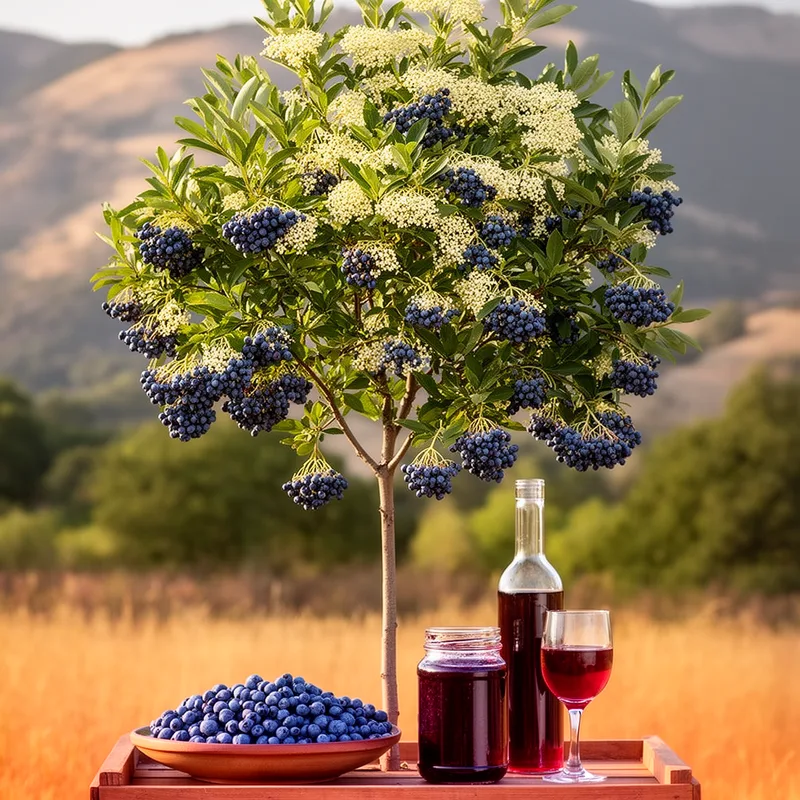
blue elderberry
- noun
- /blu ˈɛldərˌbɛri/
- US
- The blue elderberry produces clusters of fragrant white flowers in the spring.
Examples
-
Jams made from blue elderberries are prized for their unique flavor and color.
-
We planted a blue elderberry in our backyard to attract birds and pollinators.
-
The blue elderberry thrives in the foothills and mountain regions of California.
-
The blue elderberry grows well in sunny areas.
-
I found some ripe blue elderberries in the woods.
-
She made delicious wine using fresh blue elderberries harvested from her garden.
-
Many gardeners choose to grow blue elderberries because they attract butterflies and other beneficial insects.
Synonyms

A shrub or small tree with white flowers and blue berries used for wine and jelly
A small tree or shrub with white flowers and clusters of blue berries
Surface Forms
Morphology
The noun phrase is a straightforward adjective + noun composition: 'blue' simply specifies the color/variety of the 'elderberry', so the overall meaning (an elderberry with blue berries or a blue variety) is directly derivable from the parts. This descriptive naming pattern is common cross-linguistically and follows regular English modifier + head noun structure, so a B1 learner who knows both words will readily understand it.
Etymology
Blue elderberry comes from a simple picture: an elderberry bush with blue berries that people use to make 'jams' and 'wines'. So the name tells you it is a bush or small tree with blue fruit used for food.

