
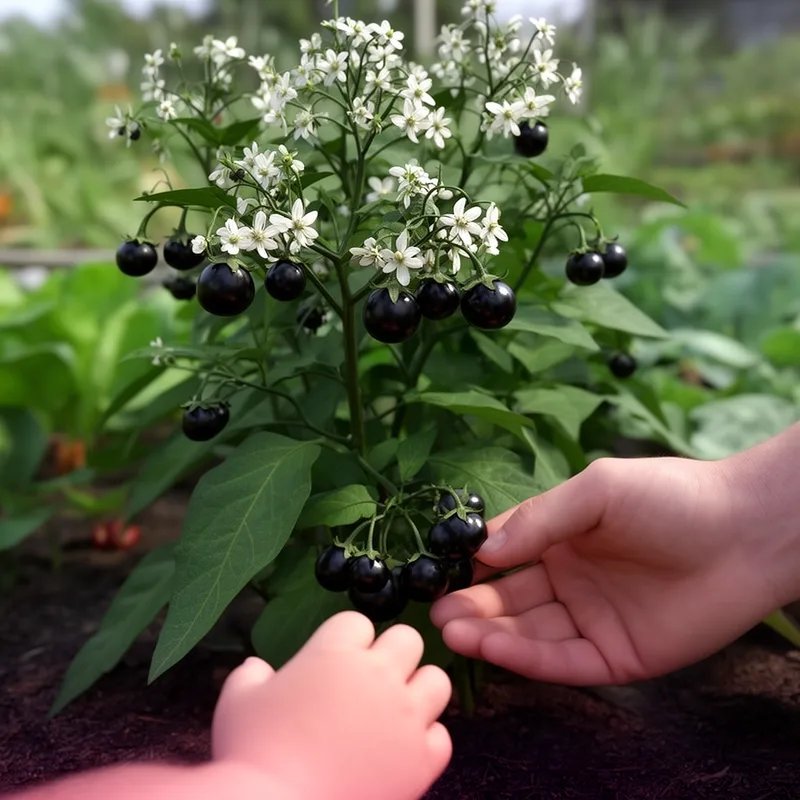
black nightshade
- noun
- /blæk ˈnaɪtʃeɪd/
- Some people confuse black nightshade with other plants.
Examples
-
Some cultures use the ripe berries of black nightshade in traditional cooking, but caution is necessary because parts of the plant are toxic.
-
The black nightshade is common in many gardens.
-
Children should never eat black nightshade berries they find outdoors, since identification can be difficult.
-
Many gardeners are surprised to find black nightshade growing wild among their vegetables.
-
Many communities in Africa consider black nightshade a vital source of nutrition and use it in various traditional dishes.
-
Despite its toxicity in certain parts, some people safely consume black nightshade as a vegetable in their diets.
-
Farmers often battle black nightshade as it competes with crops for nutrients in the soil.
Synonyms
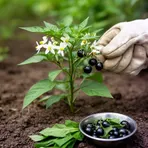
A small plant with white flowers and black berries that can be poisonous or sometimes edible
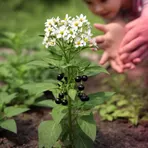
A plant from Europe and Asia with white flowers and black berries that can be poisonous
How Toxic


Surface Forms
Morphology
This is a straightforward adjective + noun compound where 'black' modifies the noun 'nightshade', so a learner who knows both words can infer it refers to a kind of nightshade that is black in appearance. The botanical/encyclopedic specifics (species name, edibility/poisonous varieties) go beyond basic compositional meaning but do not affect the transparent adjective–noun derivation.
Etymology
The plant black nightshade may get its name from its dark berries and old stories that it could make people sleepy or sick. The word black points to the dark berries and nightshade comes from beliefs that the plant caused 'sleep' or was 'poisonous', so the name warns that some parts can be dangerous.