
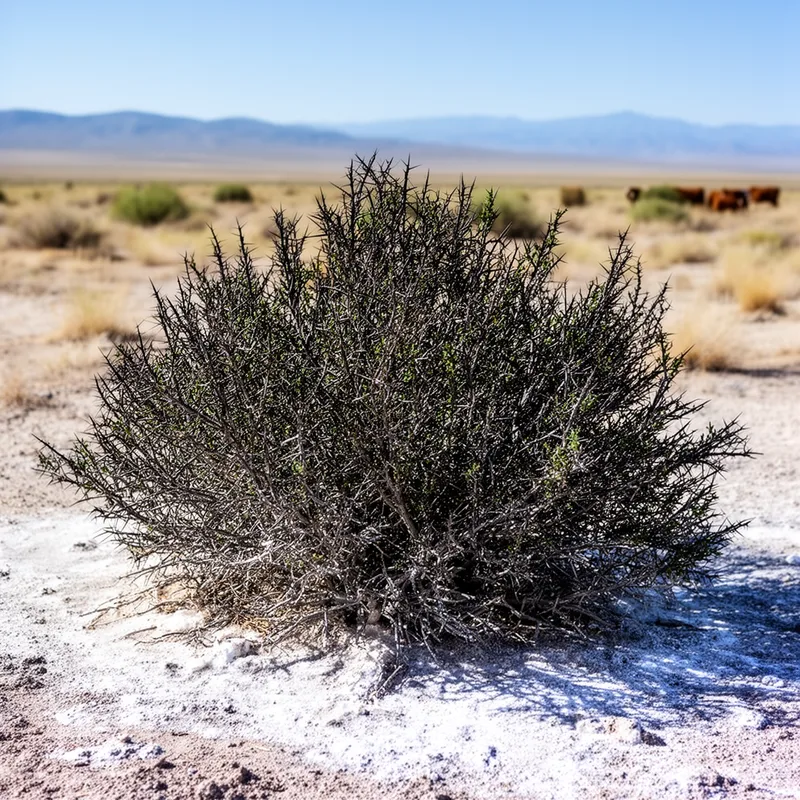
black greasewood
- noun
- Specialized
- Black greasewood is often found thriving in the harsh, alkaline soils of the western United States.
Examples
-
Livestock tend to avoid black greasewood because of its spiny branches and bitter taste.
-
Wildlife biologists study black greasewood as an indicator plant for certain soil conditions.
-
The black greasewood thrives in dry, alkaline areas.
-
Many black greasewoods can be found in the desert.
-
Black greasewood is often found thriving in the harsh, alkaline soils of the western United States.
-
Livestock tend to avoid black greasewood because of its spiny branches and bitter taste.
-
Wildlife biologists study black greasewood as an indicator plant for certain soil conditions.
Synonyms


 1
9.9
A low spiny shrub with silvery leaves that grows in dry soils of western North America
A low spiny shrub that grows in salty soil in dry areas
Surface Forms
Morphology
This is a straightforward adjective + noun combination: 'black' simply specifies a color property of the noun 'greasewood'. A B1 learner who knows both words will readily infer it denotes a greasewood plant that is black or dark in color; the botanical specifics (habitat, hardness) are extra encyclopedic detail but not required to understand the phrase.
Etymology
Black greasewood may come from the plant's dark stems and shiny, oily leaves that look greasy. People called it greasewood for that 'oily' look and black for its 'dark' color, so the name helps you picture the shrub.