

bivalved


 1
7.7
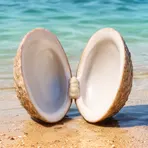
Having a shell made of two parts joined by a hinge like a clam or oyster
- adjective
- /ˈbaɪvælvd/
:
bivalvo
- The clam is a bivalved mollusk that can be found buried in the sand.
Examples
-
Many species of oysters are bivalved, with two hinged shells protecting their soft bodies.
-
Scientists study bivalved organisms to understand their unique adaptations in aquatic environments.
-
In 1987, Sulsenti et al. reported their use of Prades's bivalved speculum and operating microscope to ligate the sphenopalatine artery in the middle meatus.
Academic text (2005)
Synonyms
bivalve
vsbivalved
1
7.9
Having two hinged shells, as in clams or oysters
is used more broadly for mollusks and other similar two-part shelled organisms

9.9
Relating to animals that have two shells, like clams or oysters
is used for any organism having a shell with two hinged parts
Surface Forms
bivalved positive
Morphology
Etymology
The word bivalved breaks into bi- 'two' and valve 'door'. So think of a shell with two 'doors' joined so they can open and close, which is why bivalved describes clams, oysters and mussels with shells made of two parts.