

bivalved
7.7
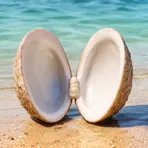
Having a shell made of two parts joined by a hinge like a clam or oyster
- adjective
- /ˈbaɪvælvd/
:
bivalvo
- The clam is a bivalved mollusk that can be found buried in the sand.
Examples
-
Many species of oysters are bivalved, with two hinged shells protecting their soft bodies.
-
Scientists study bivalved organisms to understand their unique adaptations in aquatic environments.
-
In 1987, Sulsenti et al. reported their use of Prades's bivalved speculum and operating microscope to ligate the sphenopalatine artery in the middle meatus.
Academic text (2005)
Synonyms
bivalve
vsbivalved
7.9
Having two hinged shells, as in clams or oysters
is used more broadly for mollusks and other similar two-part shelled organisms

9.9
Relating to animals that have two shells, like clams or oysters
is used for any organism having a shell with two hinged parts
Surface Forms
bivalved positive
Morphology
Etymology
The word bivalved breaks into bi- 'two' and valve 'door'. So think of a shell with two 'doors' joined so they can open and close, which is why bivalved describes clams, oysters and mussels with shells made of two parts.

