
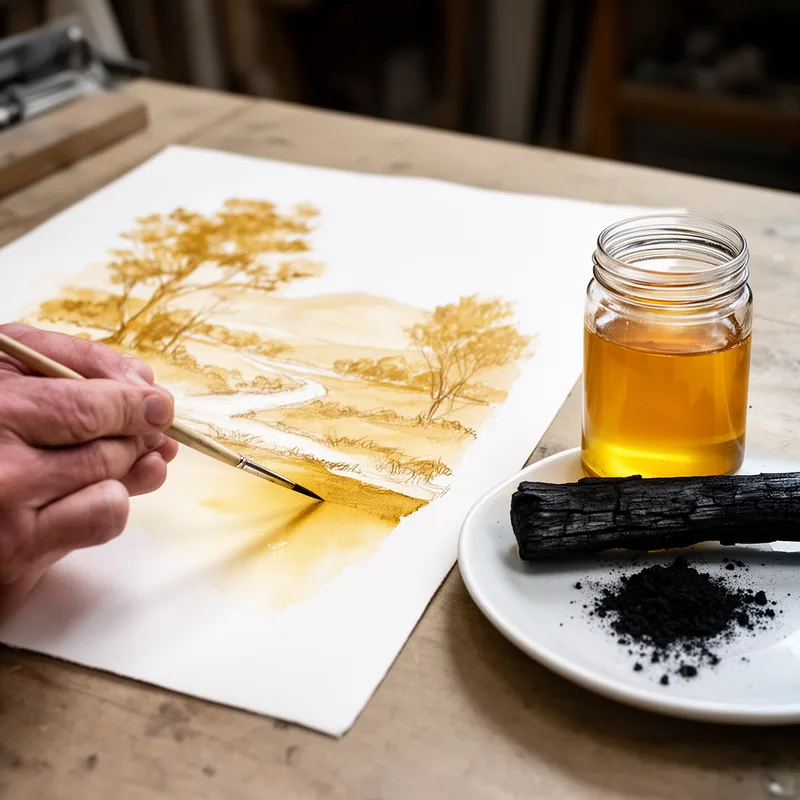
bistre
- noun
- /ˈbɪstrə/
- Specialized
- The artist used bistre to create a warm background.
Examples
-
The old master sketches were done in bistre to create warm brown tones.
-
The artist preferred to use bistre for creating warm, natural tones in her watercolor paintings.
-
She mixed bistre with water to achieve a subtle wash for her landscape painting.
-
The museum displayed drawings in ink, charcoal, and bistre from the 18th century.
-
Are you familiar with bistre as a pigment?
-
In her drawing class, she introduced her students to bistre, explaining how it is made from the soot of burned wood.
-
The brownish-yellow pigment known as bistre is often praised for its versatility and rich texture in art.
Synonyms

 1
6.7
1
6.7

A reddish-brown paint color often used for paintings or walls

 1
6.7
1
6.7
A medium to dark brown color with a slight red tone used in painting

A brown-yellow colour made from wood soot that dissolves in water and is used for drawing and painting

A reddish-brown natural color from the earth used for painting
Surface Forms
Etymology
Bistre comes from an old name for the dark 'soot' left when wood, especially beech wood, is burned, and artists turned that soot into a warm brown pigment. So bistre today means the brownish-yellow ink or paint made from wood soot, which explains its deep, smoky colour.