

bister
- noun
- /ˈbɪstər/
- Specialized
- Renaissance drawings often feature bister washes for a warm, soft effect.
Examples
-
The artist used bister to create delicate shadows in the landscape sketch.
-
She preferred bister over ink for its translucent, earthy tone.
-
The artist used bister to create a warm background.
-
Many painters prefer bister for its unique tone.
-
Renaissance drawings often feature bister washes for a warm, soft effect.
-
She preferred bister over ink for its translucent, earthy tone.
-
The artist used bister to create delicate shadows in the landscape sketch.
Synonyms
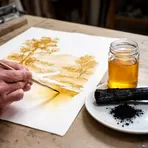
A warm brownish yellow colour made from wood soot used for drawing and washes
Surface Forms
Etymology
Bister comes from the French bistre, and earlier from the German Bister, words for the dark 'soot' used to make the color, which artists mixed with water to make a warm, brownish-yellow wash. So, bister now means the soft, brownish-yellow pigment made from wood 'soot', like a warm natural 'ink'.

