

biosolid
 1
5.8
1
5.8

- noun
- /ˈbaɪoʊˌsɒlɪd/
- Specialized
- And so once we talk about the biosolid portion, where does that actually go?
- biosolids compost
- biosolid application
- beneficial use of biosolids
Examples
-
The remainder of the year, biosolids are land applied on the Authority's 15 licensed sites.
Academic text (1999) -
At that time, approximately 50 percent of the biosolids were land applied.
Academic text (1999) -
"Being on a small island, we have very few options regarding biosolids use and disposal.
Academic text (1999) -
Last year, 56 percent of the state's biosolids were applied to farms and 37 percent were composted.
Academic text (1999) -
Currently, 80 percent of LAWPCA's biosolids are composted while 20 percent are land applied.
Academic text (1999) -
In some cases, precomposting of biosolids was done to eliminate pathogens.
Academic text (1999) -
Before composting, about 15 to 20 percent lime is incorporated into the biosolids for stabilization.
Academic text (1999) -
The Butler Area Sewer Authority in Pennsylvania produced the biosolids compost used for the riverfront project.
Academic text (1999) -
The town of Wilton's wastewater treatment facility has been successfully composting its biosolids since 1993.
Academic text (1999) -
Farmers often use biosolids to enhance soil fertility in their fields.
Synonyms
 91
3.0
91
3.0
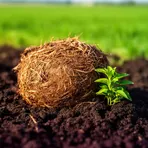
Something added to soil to help plants grow
 57
2.8
57
2.8
The waste animals produce that is often used to fertilize soil


 1
9.9
1
9.9
Human waste collected at night and used to fertilize fields

A substance with tiny living things that you put on soil, seeds, or plants to help them grow
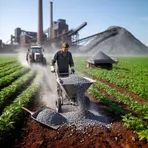
Material from making steel that farmers use as fertilizer

Leftover food and plant parts collected to make compost or natural fertilizer
Surface Forms
Morphology
Etymology
The word biosolid comes from bio- meaning 'life', as in biology, and solid meaning 'material' or 'firm'. So a biosolid is a solid material made from treated waste of living things that is used as a fertilizer to help the soil.