
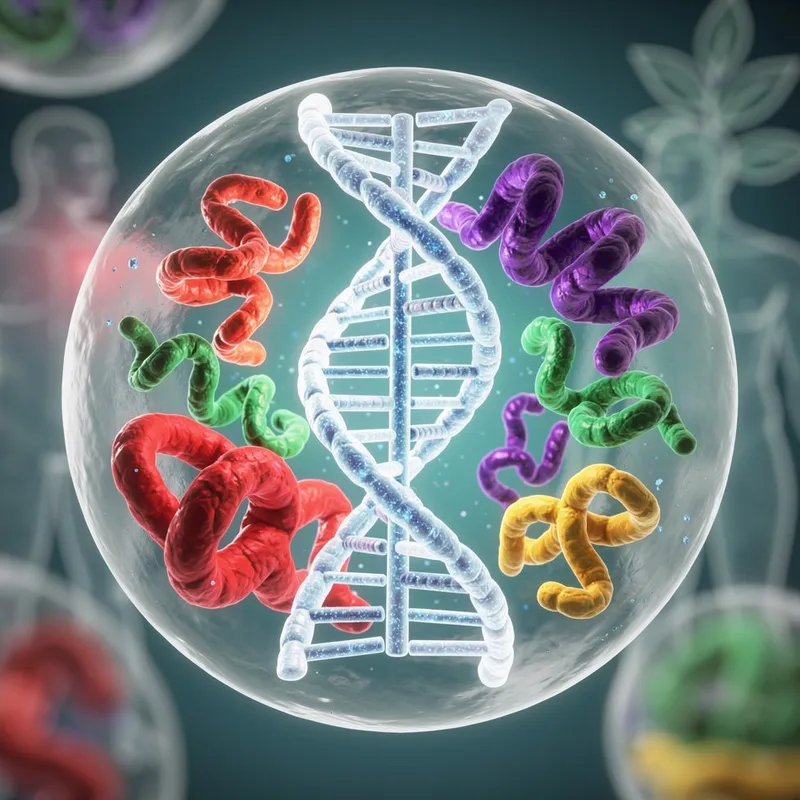
biomolecule
 1
3.7
1
3.7

- noun
- /ˌbaɪoʊˈmɒlɪˌkjuːl/
- Specialized
- Proteins and nucleic acids are types of biomolecules that play crucial roles in living cells.
- large biomolecules
Loading YouTube…
Watch on YouTubeYou just need simple amino acids, just simple biomolecules.
- You just need simple amino acids, just simple biomolecules.
Examples
-
Another useful feature is technetium's ability to bind chemically with many biomolecules.
Academic text (2006) -
But even more than that, you have various biomolecules that are very temperature sensitive.
-
So our next class of of biomolecule that we're going to talk about are nucleic acids.
-
Understanding biological systems, then, rests in part on understanding how biomolecules shift shape.
Academic text (2011) -
Nanoparticles and nanowires exist on a scale similar to biomolecules such as DNA and proteins.
Academic text (2004) -
Such calculations should have a significant impact on our understanding of complicated solids, large biomolecules, and complex liquids.
Academic text (1999) -
However, the process of TRR is sophisticated and involves various genes and other biomolecules, and better combinations of genes are expected.
Academic text (2018) -
The explosive evaporation of the matrix lifts the biomolecules into the gas phase and transfers charge to them.
Academic text (2002) -
On paper, thermal neutrons seem ideal for probing the structure of crystallized biomolecules.
Academic text (2003) -
Arrays of surface-bound biomolecules find applications in biosensors, chromatography, diagnostic immunoassays, cell culturing, DNA microarrays, and other analytical procedures.
Academic text (2001)
Synonyms
 2
4.1
2
4.1
A chemical made or used by living things
Surface Forms
Morphology
Etymology
The word biomolecule starts with bio- 'life', the same bio- you see in biology, and ends with molecule 'small unit'. So a biomolecule is a 'small unit of life', like proteins, DNA, or fats that living things are made of.