
beta-carotene
 2
4.4
2
4.4

- noun
- /ˈbeɪtə ˈkærəˌtin/
- Specialized
- The transgenic rice grain has a light golden-yellow color and contains sufficient beta-carotene to meet human vitamin A requirements from rice alone.
- beta-carotene (vitamin A)
- antioxidant beta-carotene
- beta-carotene and other carotenoids
Loading YouTube…
Watch on YouTubeIf you're eating lots of beta carotene, rich colorful vegetables, Reds and oranges and yellows.
- If you're eating lots of beta carotene, rich colorful vegetables, Reds and oranges and yellows.
Examples
-
They are also a good source of calcium, folate, potassium, and beta carotene.
Blog text (6) -
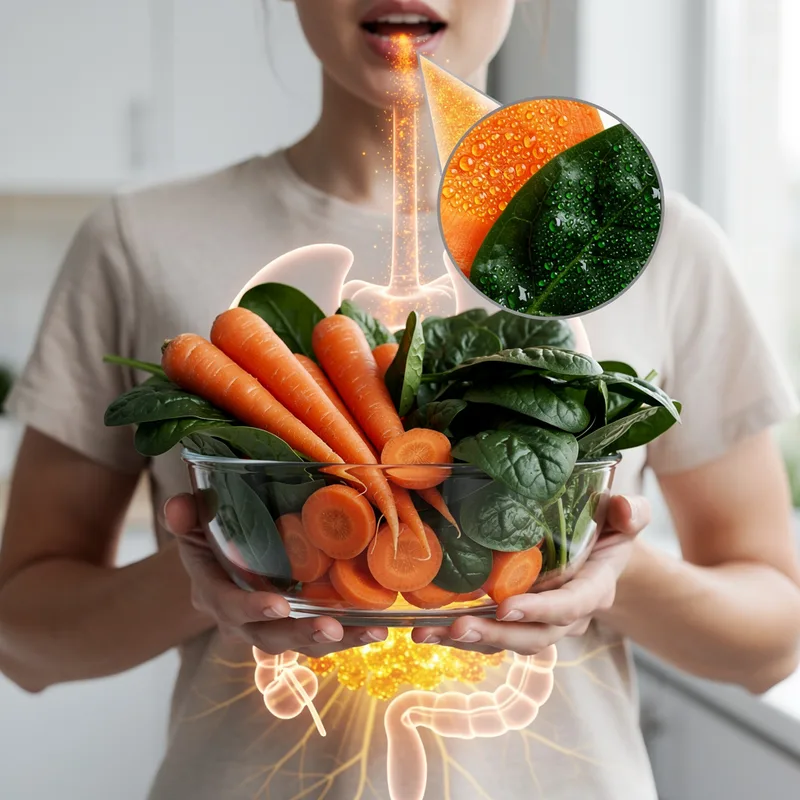
Carrots are an excellent source of beta-carotene, which helps the body produce vitamin A.
-
Then let me explain that vitamin A and beta carotene are the fountain of youth for your skin.
Blog text (6) -
To date, the most exciting development has been the introduction of genes that produce beta-carotene in the rice grain.
Academic text (2001) -
Beta-carotene is present in the leaves of the rice plant, but conventional plant breeding has been unable to put it into the grain.
Academic text (2001) -
Besides, beta carotene combats free radicals that cause skin aging.
Blog text (6) -
In some studies, sweet potatoes have been shown to be a better source of bioavailable beta-carotene than green leafy vegetables.
Blog text (19) -
Sweet potatoes contain an abundance of bioavailable beta-carotene, which makes them a strong antioxidant source.
Blog text (28) -
Beta carotene converts to Vitamin A in your body, so one serving gives you as much as 700% of the Vitamin A you need.
Blog text (6) -
Recent large clinical trials have focused on specific antioxidant compounds in fruits and vegetables, such as beta carotene, vitamin C, or vitamin E.
Academic text (1996)
Synonyms
 9
6.5
9
6.5
A yellow or orange substance in plants, especially carrots, that the body uses to make vitamin A

A substance in plants that the body turns into vitamin A
Surface Forms
Morphology
Etymology
Beta-carotene comes from beta, a Greek letter meaning 'second', and carotene, which comes from carrot because this orange colour was first found in carrots. That's why beta-carotene is the orange colour in many vegetables that the body can turn into vitamin A.