
benign prostatic hyperplasia
- noun
- /bɪˈnaɪn prɒˈstætɪk haɪpərˈpleɪziə/
- Specialized
- Regular check-ups are important for diagnosing benign prostatic hyperplasia early, especially in those over 50.
- benign prostatic hyperplasia (BPH)
Examples
-
Also, saw Palmetto has been demonstrated to show treatment in small studies for benign prostatic hyperplasia, which is also called BPH.
-
For example, the Urology Decision Making project has been piloting the provision of a DVD and other materials to people with either low-grade cancer of the prostate or benign prostatic hyperplasia.
Academic text (2012) -
Many older men experience symptoms related to benign prostatic hyperplasia, making it a common health concern.
-
As men age, they often find that benign prostatic hyperplasia leads to difficulties with urination.
Synonyms

 1
7.5
1
7.5

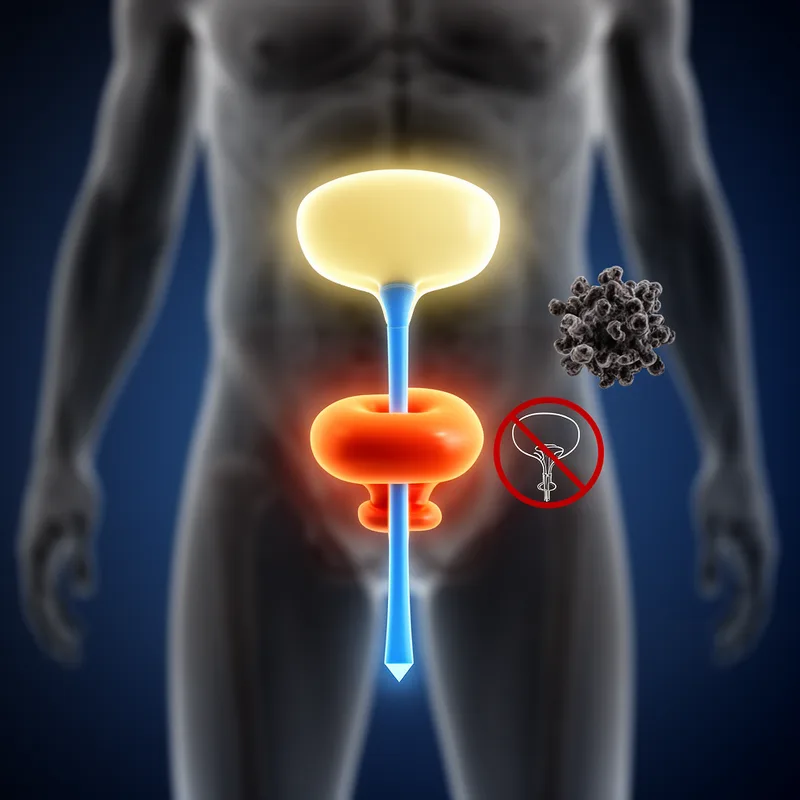
An enlarged prostate in older men that can make it hard to pass urine
Surface Forms
Morphology
benign + prostatic + hyperplasia
The meaning is directly compositional: 'benign' (nonmalignant) + 'prostatic' (of the prostate) + 'hyperplasia' (abnormal growth) yields a non-cancerous enlargement of the prostate. This is a standard medical compound found across languages, so a B1 learner who knows the constituent meanings can infer the overall meaning despite its technical register.
Etymology
The medical name benign prostatic hyperplasia is a plain description: benign means 'not cancer', prostatic refers to the 'prostate', a small male organ, and hyperplasia means 'extra cells' that make it grow. When the prostate grows, it presses the tube that carries urine, so the term explains why it means an enlarged, non-cancer prostate that causes 'urinary problems'.