
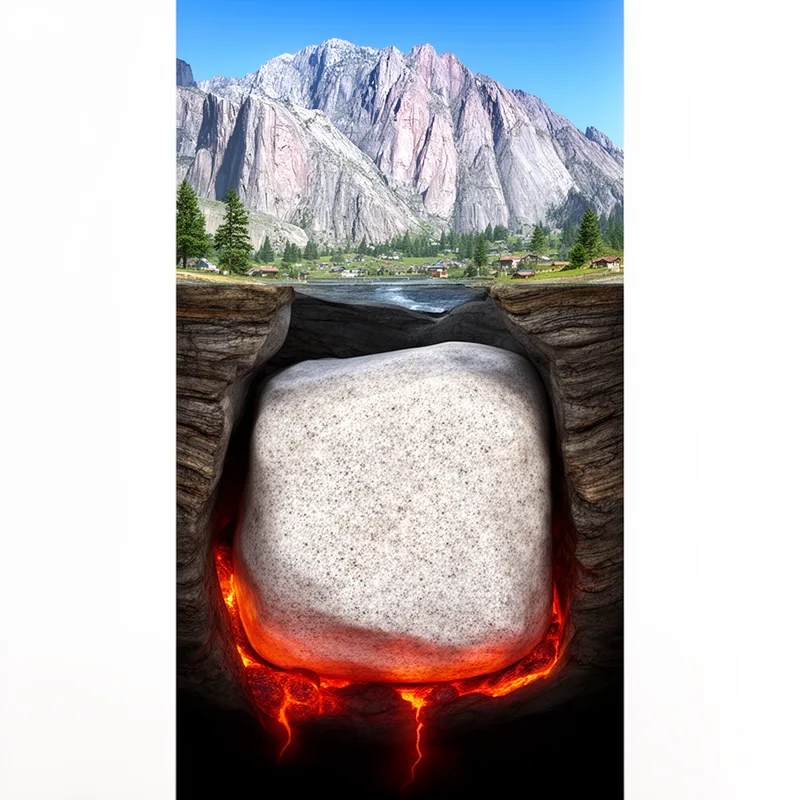
batholithic
9.9
Of a very large mass of hard rock formed when hot rock cools under the ground
- adjective
- /ˌbæθəˈlɪθɪk/
- Specialized
:
batolítico
- Many granitic rocks from batholithic bodies contain crystals and crystal aggregates that differ texturally (and mineralogically) from the bulk of the enclosing rock.
Examples
-
The batholithic intrusion gave rise to a variety of minerals found in the surrounding area.
-
Geologists study the batholithic rock to understand its role in the Earth's crust.
-
The batholithic formation's size and composition make it a unique feature of the landscape.
Synonyms
9.9
Describing very large hard rock that forms underground when melted rock cools
is the same meaning but uses the other less common spelling
Surface Forms
batholithic positive
Morphology
Etymology
Batholithic comes from Greek parts batho- meaning 'deep' and -lithic from lithos meaning 'stone', the same 'lith' you see in monolith. So a batholithic mass is like a very large 'deep stone' — a huge body of rock made when hot liquid rock cools under the ground, which is why the word describes large underground rock formations.

