
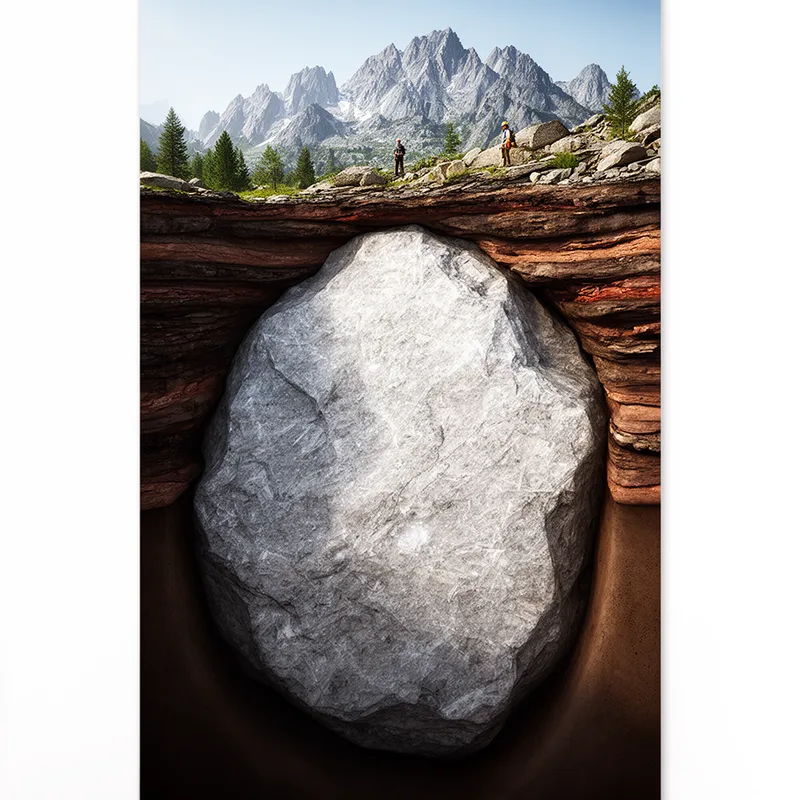
batholite
- noun
- /ˈbæθəˌlaɪt/
- UK
- A massive batholite lies beneath the mountain range, shaping the region's geology.
Examples
-
Geologists study batholites to understand the history of Earth's crust.
-
The Sierra Nevada is known for its extensive batholite formations.
-
The batholite formed millions of years ago.
-
Researchers discovered a new batholite in the region.
-
A massive batholite lies beneath the mountain range, shaping the region's geology.
-
The Sierra Nevada is known for its extensive batholite formations.
-
Geologists study batholites to understand the history of Earth's crust.
Synonyms


 1
9.9
1
9.9
A large mass of hard rock that forms when hot liquid rock deep underground cools slowly

A very large mass of hard rock formed when hot liquid rock deep under the ground cooled

A rock that forms when melted rock deep underground cools slowly
How Big

Surface Forms
Morphology
batholite = batho + lite
Formed from Greek combining forms batho- ('deep') + -lite ('stone/mineral'); these are technical combining forms (not standalone English words), so learners cannot reliably infer the geological meaning and may be misled by the familiar English word 'bath'.
Etymology
The word batholite comes from the Greek parts bath ('deep') and lith ('stone'), so it literally means 'deep stone'. That's why a batholite is a very large mass of rock that formed deep inside the Earth.