
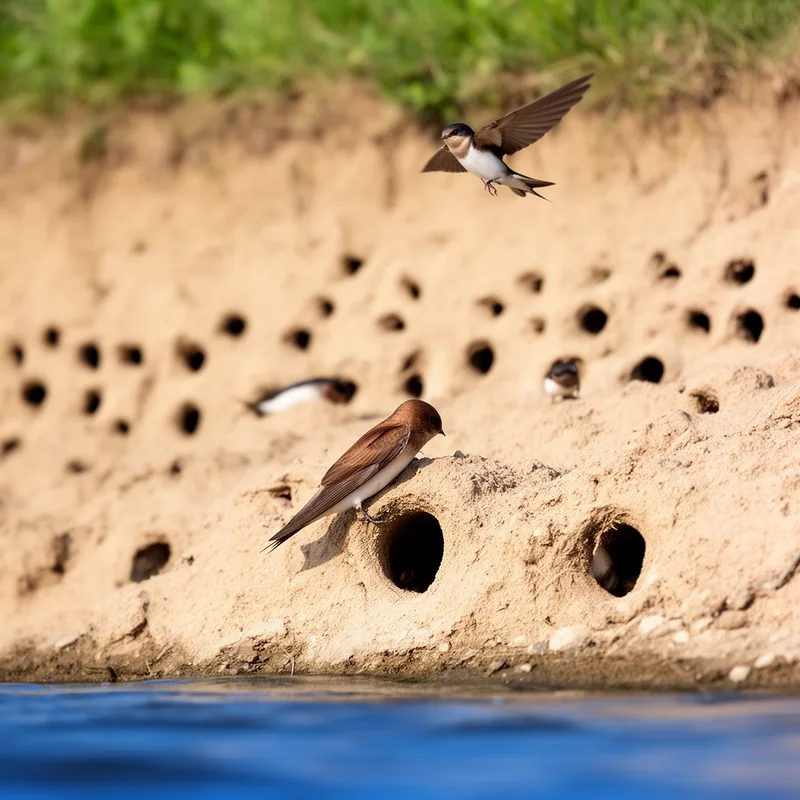
bank swallow
- noun
- /bæŋk ˈswɑloʊ/
- US
- The bank swallow is known for digging horizontal tunnels into sandy cliffs for its nests.
Examples
-
During the spring, large colonies of bank swallows can be seen nesting in tunnels dug into sandy banks.
-
We spotted a bank swallow darting swiftly over the lake in search of insects.
-
During the spring, large colonies of bank swallows can be seen nesting along the riverbank.
-
The bank swallow is known for its agile flight.
-
Many bank swallows can be seen near riverbanks.
-
The bank swallow is known for nesting in the vertical cliffs created by river erosion.
-
We spotted a bank swallow swiftly flying over the water as it searched for small insects to eat.
Synonyms

A small swallow that nests in tunnels in sand or clay river banks

A small swallow that migrates, nests in holes in sandy riverbanks and eats insects
A small swallow that digs holes in sandy or clay banks to make its nest
Surface Forms
Morphology
The meaning 'a swallow that nests in banks' is directly and compositionally derived from 'bank' (an embankment) + 'swallow' (the bird), signalling a bird associated with banks. This habitat-based compound follows a very regular English noun-compounding pattern (common cross-linguistically for species names), so a B1 learner who knows both words would readily infer the intended meaning.
Etymology
Bank swallow comes from how this swallow digs horizontal tunnels in sandy river banks to make its nest. So the name simply refers to 'a small bird that travels long distances and nests in holes in sandy banks'.

