
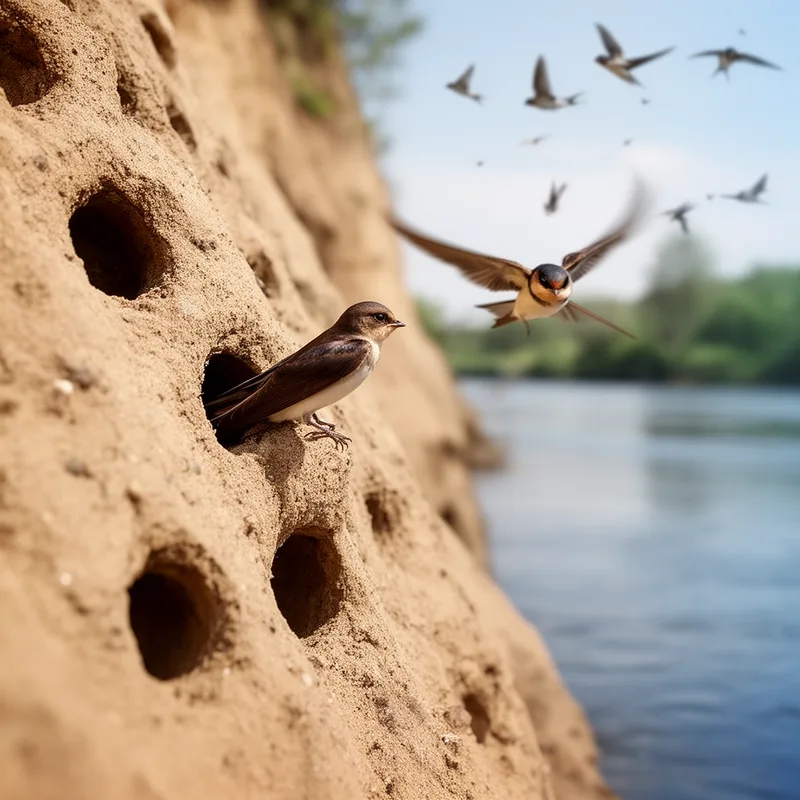
Riparia riparia
- noun
- Specialized
- The sandy cliffs along the bank provided perfect nesting sites for Riparia riparia.
Examples
-
During migration season, large numbers of Riparia riparia can be observed gathering near wetlands.
-
A flock of Riparia riparia swooped low over the river, catching insects in flight.
-
The Riparia riparia is known for its distinctive nesting habits.
-
In the spring, Riparia riparia return to their nesting sites.
-
A flock of Riparia riparia swooped low over the river, catching insects in flight.
-
During migration season, large numbers of Riparia riparia can be observed gathering near wetlands.
-
The sandy cliffs along the bank provided perfect nesting sites for Riparia riparia.
Synonyms
A small bird that migrates and nests in tunnels dug into clay or sand banks
A small swallow that migrates, nests in holes in sandy riverbanks and eats insects
A small swallow that digs holes in sandy or clay banks to make its nest
Surface Forms
Morphology
This is a scientific Latin binomial (genus + species) rather than a compositional English phrase; even if a learner knows the constituent label 'Riparia' as a genus, the repeated Latin form does not transparently convey the common meaning 'sand martin' or its nesting habits. Understanding this name requires specialist taxonomic knowledge rather than ordinary lexical composition, so a B1 learner would not be able to derive the meaning from the parts.
Etymology
The name Riparia riparia comes from the Latin word ripa, which means 'river bank'. These small swallows dig tunnel nests in soft sand or clay on river banks, so the name tells you exactly where they live.

