

ballad
 62
3.7
62
3.7

- noun
- /ˈbæləd/
- Literature
- Jackfish sang old Irish ballads that made him so sad he cried, especially "Danny Boy."
- folk ballads
- sing ballads
- popular ballads
Loading YouTube…
Watch on YouTubeHis disco was amazing, his ballads were unbelievable.
- His disco was amazing, his ballads were unbelievable.
- And we talked about classic metal power ballads, which was a really fun thing.
- It was called a narco corrido or drug ballad about this guy.
- Oh, I really like to do like proper power ballads.
- When the sun spins, nothing as eternal as the melody of the richest ballads that call to me.
- She says on the whole, I liked ballads and songs better than the jigs and reels.
- And all of these looters of the state have their uniforms on with their medals, and someone's given a speech or singing a ballad, and their eyes are moist.
- You had like power ballads, you had dancing things, you had steel pans.
- Elvis had a rehearsal with Scotty at his house, went into the studio and sang nothing but ballads.
- I found out there not only a ballad, but the right ballad.
- And so you have these the songs that are a ballad song or a rising spirit song or a comedy pattern song.
Examples
-
They're as American as apple pie: ballads, blues, bluegrass, Broadway, and jazz.
Academic text (2008) -
Maybe, one day, someone will sing ballads of me.
-
I found out there not only a ballad, but the right ballad.
-
-Let's go from the top of the ballad and see what we get, huh?
-
Is it because you were in the wrong key during the ballad?
-
Her poems, most frequently cast in the ballad form, are neither especially strong nor outstanding.
Academic text (1992) -
Rock 'n' roll became the music of discotheques, and the rock ballad took hold of youth tastes.
Academic text (1991) -
To inform the listener was the original purpose of ballads of this type.
Academic text (1997) -
It's all the anthems and dance crazes and ballads and marches.
-
The singer performed a beautiful ballad that told a story of lost love.
Synonyms
 87
9.9
87
9.9
A short narrative poem or song from medieval times, often meant to be sung
 11
2.2
11
2.2
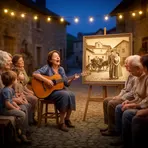
A song people in a place sing for a long time that tells their stories

 1
3.5
1
3.5
A traditional story song sung by ordinary people about love or history
 1
9.9
1
9.9
A French poem with three parts and a short final part that tells a story and repeats a line

A short medieval poem that tells a romantic story from legend
Compounds

How Narrative

Surface Forms
Etymology
Ballad comes from an old Latin word ballare, which means 'dance', and is like the English word ball (a dance) because these songs were first sung for dancing and often told a story with a simple beat. So today a ballad is a song or poem that tells a story.