
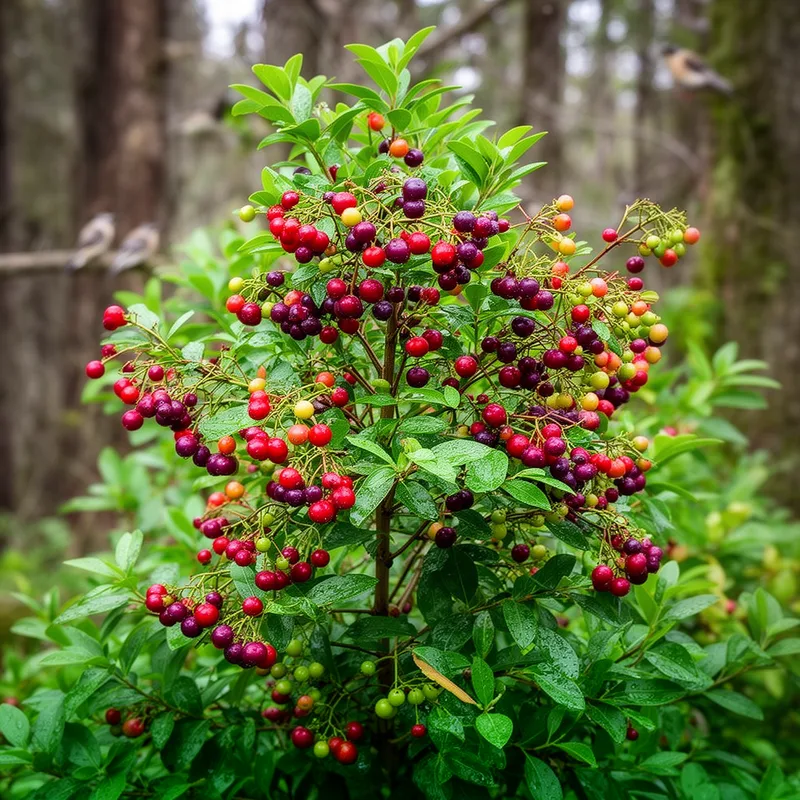
bacciferous
- adjective
- /ˌbækɪˈfɪrəs/
- Specialized
- The bacciferous plants in the garden provide a colorful display of berries for the autumn season.
Examples
-
Many birds are attracted to bacciferous plants for their abundant food supply.
-
The bacciferous shrubs thrive in moist woodland areas.
-
The bacciferous characteristic of the bush makes it popular with gardeners.
-
The bacciferous shrub attracts many birds.
-
Many bacciferous plants thrive in this region.
-
Several bacciferous species, like the elderberry and blueberry, are valued for their delicious fruits.
-
Birds flock to the bacciferous trees, eagerly pecking at the ripe berries hanging from the branches.
Synonyms


How Fruitful


Surface Forms
Morphology
bacciferous = bacci + fer + ous
The word is etymologically compositional, but its Latin-derived parts are not ordinary English words, so an average learner is unlikely to recover 'berry-bearing' from the form alone.
Etymology
Bacciferous comes from the Latin bacca 'berry' and the ending -ferous 'bearing'. So it means 'bearing berries', which is why we use it for plants that produce or carry berries.