
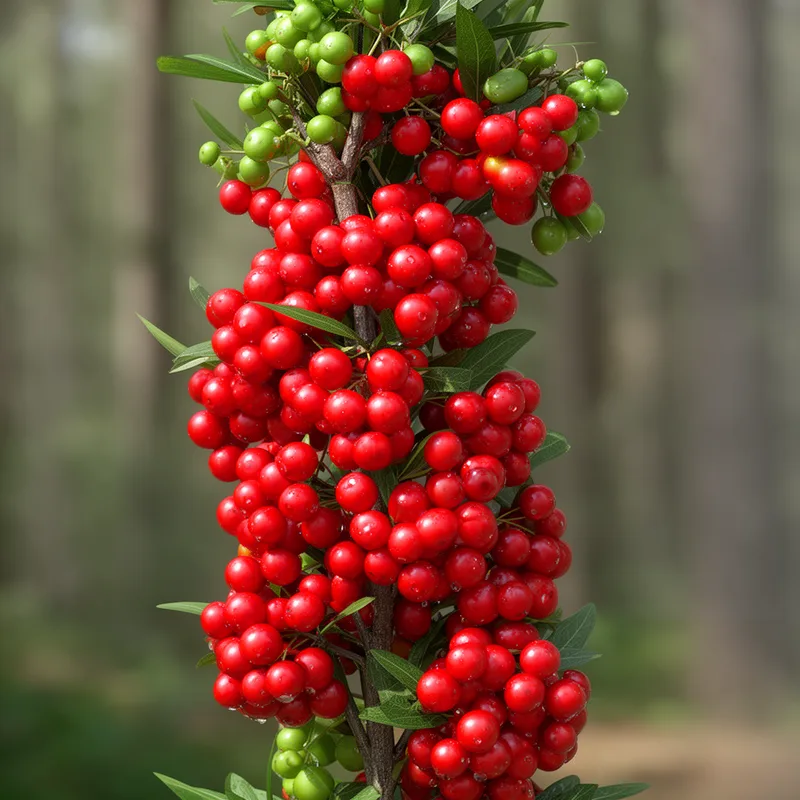
baccate
- adjective
- /ˈbækˌeɪt/
- Specialized
- The plant produces baccate fruits that attract birds in the autumn.
Examples
-
The baccate fruit of the plant is bright red.
-
The baccate appearance of the seed suggests it is adapted for animal dispersal.
-
Certain fungi form baccate structures that are mistaken for berries.
-
Many baccate species thrive in tropical climates.
-
The plant produces baccate fruits that attract birds in the autumn.
-
Certain fungi form baccate structures that are mistaken for berries.
-
The baccate appearance of the seed suggests it is adapted for animal dispersal.
Synonyms
A plant that produces berries

Having many small fruits that birds and animals eat

Having the look of a small fruit like a berry
Surface Forms
Morphology
baccate = berry (opaque) = bacca + ate
Although the adjective is formed with the productive suffix '-ate' meaning 'having' or 'characterized by', the stem 'bacca-' is a learned Latin combining form not recognizable to most learners, so the relation to the common English word 'berry' is not apparent.
Etymology
Baccate comes from the Latin root bacca, which means 'berry', so imagine something covered in little round berries. That's why baccate describes a plant or fungus that is 'berry-like' or 'having berries'.

