
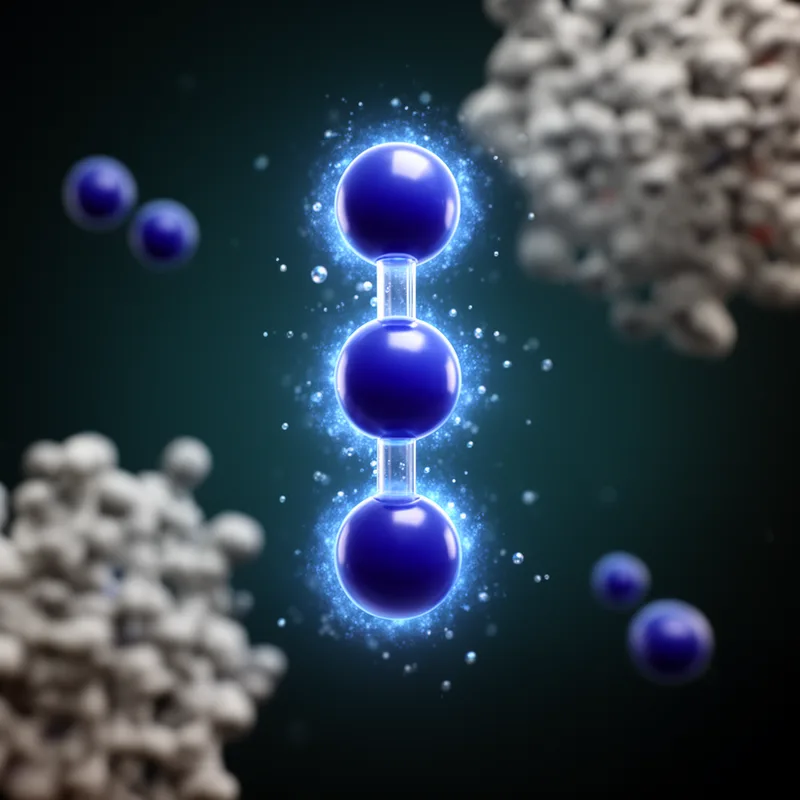
azido radical
- noun
- /əˈzaɪdoʊ ˈrædɪkəl/
- Specialized
- Researchers studied how the azido radical reacts with organic substrates.
Examples
-
The decomposition of the azido radical releases nitrogen gas in the reaction.
-
Formation of the azido radical occurs during certain photochemical processes.
-
The azido radical is important in organic chemistry.
-
I synthesized an azido radical for my research project.
-
The decomposition of the azido radical releases nitrogen gas in the reaction.
-
Researchers studied how the azido radical reacts with organic substrates.
-
Formation of the azido radical occurs during certain photochemical processes.
Synonyms

A group of three nitrogen atoms with a negative charge that attaches to molecules
Surface Forms
Morphology
This is a straightforward adjectival modification: 'azido' specifies the azido functional group and 'radical' names a reactive species with an unpaired electron, so the phrase denotes a radical bearing an azido group. Chemical nomenclature is compositional and similar across languages, so a learner who knows both constituents can infer the meaning without prior exposure.
Etymology
Azido radical comes from azido, from 'azide' meaning a group of three nitrogen atoms, and radical, meaning a single reactive piece of a molecule. So the term describes a small, very reactive part that has three nitrogens, and the name helps you picture why it behaves the way it does.

