
azeotropic


 1
9.9
- adjective
- /ˌeɪziəˈtrɒpɪk/
- Specialized
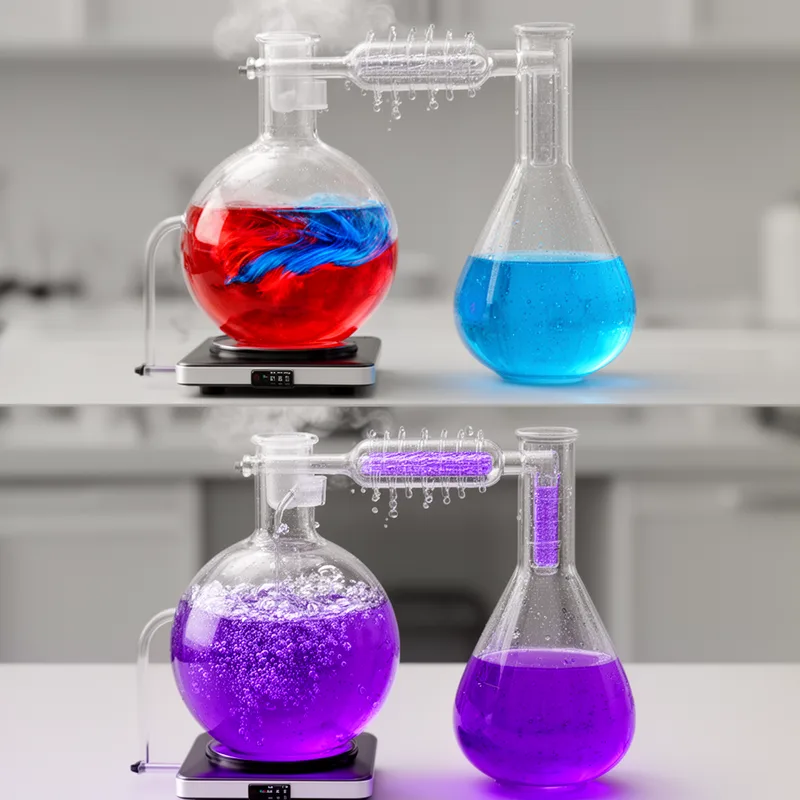
- Mixtures that are azeotropic cannot be separated by distillation because they evaporate at a constant ratio.
Examples
-
In industry, azeotropic solvents are often used because they maintain a consistent composition during evaporation.
-
Azeotropic mixtures, on the other hand, boil at a single temperature, much as a pure fluid does.
Academic text (1998) -
The temperature alteration during phase change is commonly called "temperature glide." An intermediate class of mixtures, dubbed "near-azeotropes," are really zeotropes that are close to an azeotropic composition and have a very small temperature glide.
Academic text (1998) -
The azeotropic solution formed by ethanol and water complicates the process of producing pure ethanol.
Surface Forms
Morphology
Etymology
The word azeotropic comes from three parts: a- 'not', zein 'to boil', and tropos 'turn'. So it literally means 'does not change when boiling', which explains why an azeotropic mixture evaporates at the same ratio and is hard to separate by boiling.