

autophytic plant
- noun
- /ˌɔːtəˈfaɪtɪk plænt/
- Specialized
- Most green plants are classified as autophytic plants because of their ability to photosynthesize.
Examples
-
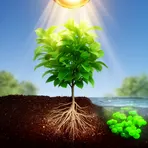
An autophytic plant creates energy by converting sunlight, water, and carbon dioxide into sugars.
-
Unlike parasitic flora, the autophytic plant does not depend on other organisms for nutrition.
-
An autophytic plant can thrive in harsh conditions.
-
Many autophytic plants are found in deserts.
-
Most green plants are classified as autophytic plants because of their ability to photosynthesize.
-
An autophytic plant creates energy by converting sunlight, water, and carbon dioxide into sugars.
-
Unlike parasitic flora, the autophytic plant does not depend on other organisms for nutrition.
Synonyms

 2
9.3
2
9.3

A living thing that makes its own food from sunlight or chemicals

 1
7.4
1
7.4
A living thing that makes its own food from sunlight or chemicals, like plants

A plant that makes its own food using sunlight and air

A living thing like a plant or algae that makes its own food using sunlight
Surface Forms
Morphology
The phrase simply combines the adjective 'autophytic' (able to synthesize its own food) with 'plant', so the meaning 'a plant that produces its own food' is directly derivable from the constituents. Although 'autophytic' is a technical, low-frequency word, its internal morphology (auto- 'self' + -phytic 'relating to plants') and literal composition make the compound meaning transparent to a learner who knows both words.
Etymology
The compound autophytic plant comes from the parts auto 'self' and phyte 'plant'. Picture a plant that makes food for itself from sunlight and water, so it means 'a plant that makes its own food'.