
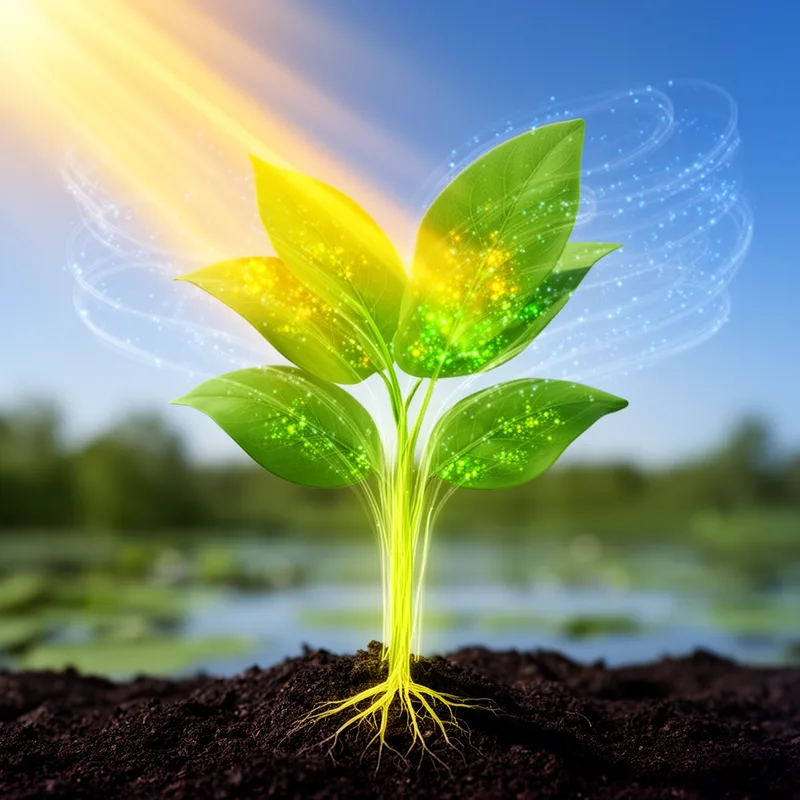
autophyte
- noun
- /ˈɔːtəˌfaɪt/
- Specialized
- The majority of green plants are considered autophytes due to their ability to perform photosynthesis.
Examples
-
Algae are often cited as classic examples of autophytes in aquatic ecosystems.
-
Unlike parasites, autophytes do not depend on other organisms for their nutrition.
-
The autophyte thrives in sunlight.
-
Many autophytes can survive in harsh environments.
-
Algae are often cited as classic examples of autophytes that produce their own food through photosynthesis.
-
The majority of green plants, such as trees and grasses, are considered autophytes because they synthesize food from sunlight.
-
Unlike parasites, autophytes generate their own nutrition from inorganic substances, highlighting their self-sufficient nature.
Synonyms

 2
9.3
2
9.3

A living thing that makes its own food from sunlight or chemicals

 1
7.4
1
7.4
A living thing that makes its own food from sunlight or chemicals, like plants

A plant that makes its own food from sunlight, water, and air
A living thing like a plant or algae that makes its own food using sunlight
Antonyms

- Specialized
1
9.4
A living thing that gets food by eating other living things or dead matter
Surface Forms
Morphology
autophyte = auto + phyte
The word is built from classical combining forms meaning 'self' and 'plant', but neither element is a transparent everyday English base for most learners, so the meaning is not easily recoverable.
Etymology
The word autophyte comes from the parts auto- meaning 'self' and -phyte meaning 'plant', the same phyte you see in 'phytoplankton'. So an autophyte is a plant that makes its own food, usually by photosynthesis, rather than depending on other living things.