
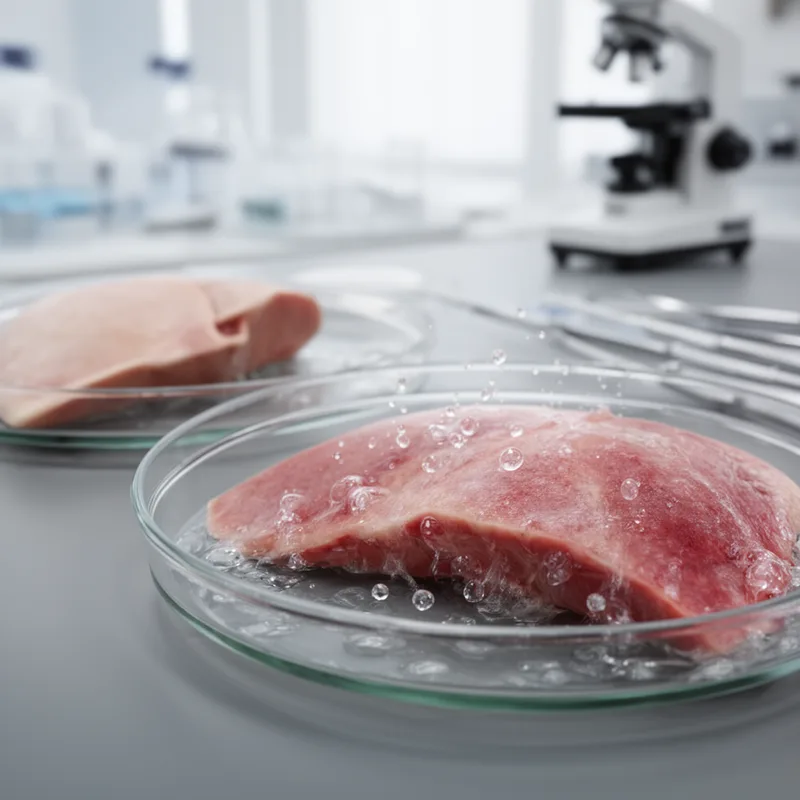
autolysis
 1
9.9
1
9.9

- noun
- /ɔːˈtɑːlɪsɪs/
- Specialized
- The scientist explained that autolysis occurs when enzymes within the cells begin to digest the tissue after the organism dies.
Examples
-
After death, the muscle tissue underwent autolysis, causing it to break down rapidly.
-
The legs aren't stiff, but there is no autolysis.
-
It was then enclosed in a totally impervious external rubber shell so that autolysis and/or dehydration were unlikely to occur.
Academic text (1991) -
This observation is in agreement with the optimum pH observed for the autolysis of arrowtooth flounder muscle (Green and Babbitt, 1990).
Academic text (1993) -
B2 fractures where we used Cannulock systems showed breakage of screws and autolysis at the tip of the implant with associated sinking of the prosthesis.
Academic text (2007) -
In the absence of preservation, the sample exhibited signs of autolysis, indicating it was no longer viable.
Synonyms


 1
9.9
1
9.9
Breakdown of dead tissue in the body, often after disease or a burn

A plant or animal using its own enzymes to break down its tissues
Surface Forms
Morphology
Etymology
Autolysis comes from the parts auto- meaning 'self' and -lysis meaning 'to break' or 'to loosen', the same -lysis you see in analysis. So autolysis is when a plant or animal 'breaks itself down' with its own enzymes after death, which is why tissues fall apart on their own.