
autoclaved cellular concrete
- noun
- /ˈɔːtəˌkleɪvd ˈsɛljələr kənˈkriːt/
- Specialized
- Many modern buildings use autoclaved cellular concrete panels for both their strength and insulation properties.
Examples
-
The construction company chose autoclaved cellular concrete because it is lightweight and easy to install.
-
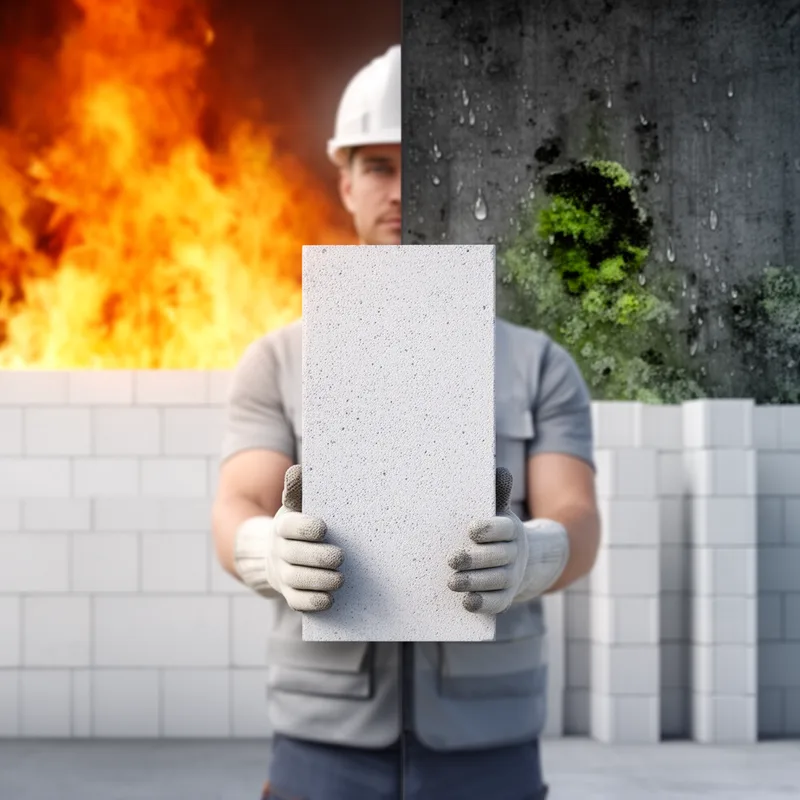
Due to its resistance to fire and mold, autoclaved cellular concrete is popular in climates with high humidity.
-
The contractor used autoclaved cellular concrete for the new building.
-
Is autoclaved cellular concrete more durable than regular concrete?
-
Because of its lightweight nature, autoclaved cellular concrete is often used in multi-story buildings to reduce overall weight.
-
For its excellent insulation and fire resistance, autoclaved cellular concrete is increasingly favored in sustainable construction.
-
The architect selected autoclaved cellular concrete for the new school due to its environmentally friendly properties.
Synonyms

 4
7.2
4
7.2

A light concrete block used to build walls that keeps heat in and resists fire and mold

A light concrete block made with steam that is strong, keeps buildings warm, and resists fire and mold

A light precast concrete made by heating it under pressure that supports buildings, insulates, and resists fire and mold

A light, strong concrete made in a factory under pressure and heat that insulates and resists fire and mold

Lightweight building material with many small air pockets that keep heat in or out

Concrete that lets water pass through and is used to reduce flooding
How Insulating
- Specialized

- Specialized
- Specialized
- Specialized
224
1.0
Surface Forms
Morphology
autoclave + cellular + concrete
The phrase is compositionally built: 'autoclaved' means treated under steam pressure, 'cellular' denotes a honeycomb-like, airy structure, and 'concrete' is the building material, so the sense 'a type of concrete that has been autoclave-processed and has a cellular structure' is directly derivable. Although it is a technical term with specific properties (lightweight, precast), an average B1 learner who knows the constituent words can infer the general meaning.
Etymology
Autoclaved cellular concrete is named for how it is made: cellular points to the many tiny air 'cells' inside that make it light, and autoclaved means the blocks are cooked with hot steam under pressure, like a giant 'pressure cooker'. That's why the name describes a light material that keeps buildings warm and resists fire today.