
atomic number 43
- noun
- /əˈtɑːmɪk ˈnʌmbər fɔːrˈtiː θriː/
- Specialized
- The atomic number 43 represents the element technetium.
Examples
-
There are no naturally occurring deposits of atomic number 43 on Earth.
-
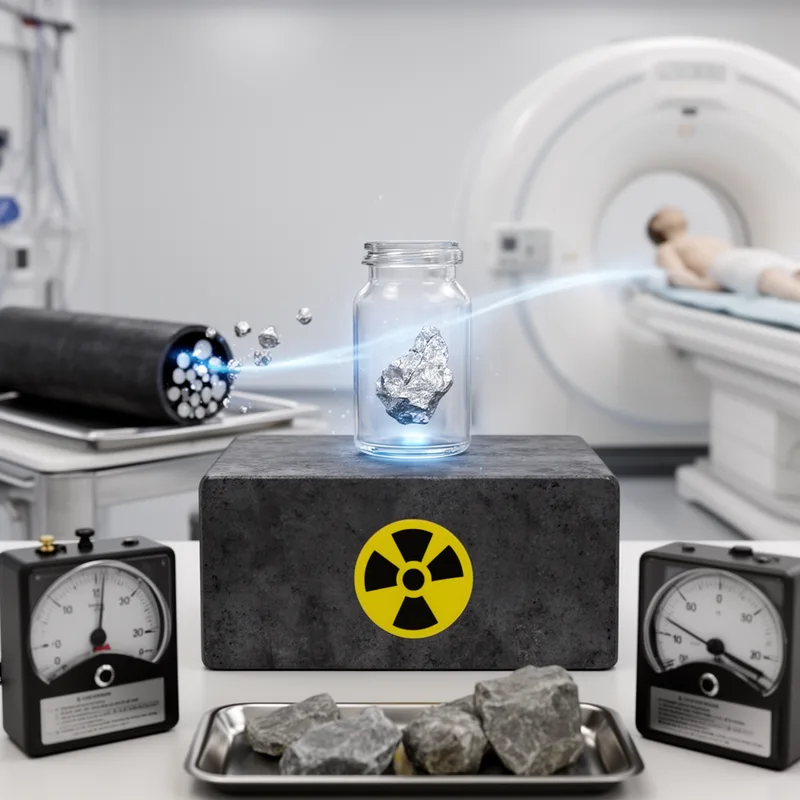
Atomic number 43 is used in some medical imaging techniques due to its radioactive properties.
-
Researchers isolated atomic number 43 while studying the by-products of uranium fission.
-
Did you know that atomic number 43 is technetium?
-
Atomic number 43 is a synthetic element used in cancer treatment and medical imaging.
-
Scientists discovered that atomic number 43 is produced as a by-product in nuclear reactors.
-
In the periodic table, atomic number 43 indicates the presence of technetium, a rare metal.
Synonyms

 1
9.9

A silvery-gray radioactive metal made in nuclear reactors and not found naturally


 1
9.9
A man-made silvery radioactive metal used in medical imaging
Surface Forms
Morphology
atomic + number + forty-three
The phrase is fully compositional: 'atomic' + 'number' + 'forty-three' directly denotes the element assigned the atomic number 43, so a learner who knows the parts can infer it refers to that chemical element. While they may not know the proper name 'technetium', the referent as 'the element with atomic number 43' is predictable and follows a common cross-linguistic scientific naming pattern.
Etymology
Atomic number 43 comes from the way elements are ordered: atomic number means the number of protons in an atom and 43 is this element's count. That's why element 43 is called 'technetium' and is usually made in labs rather than found in nature.