
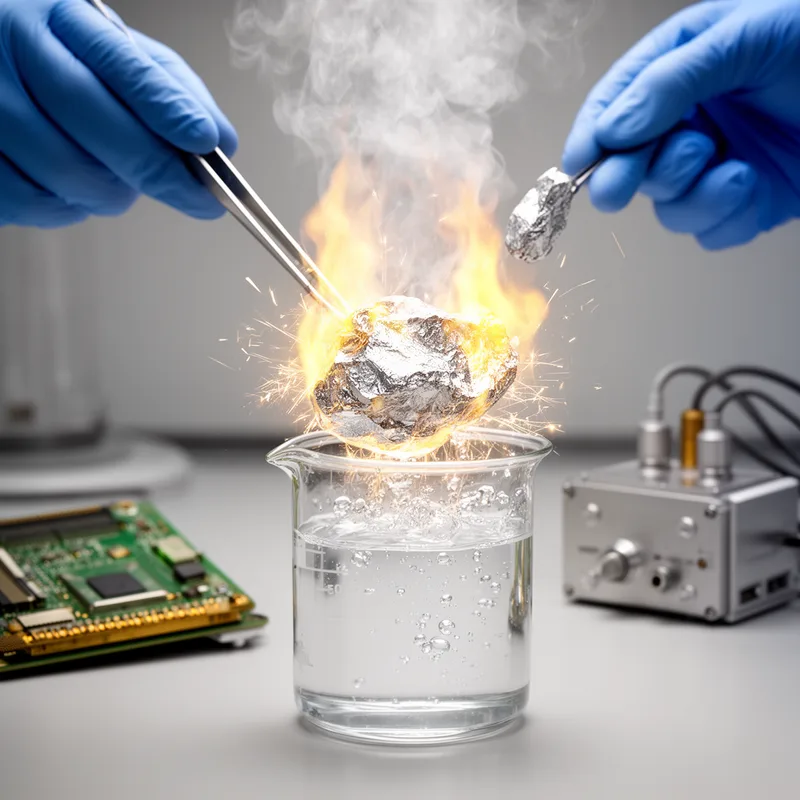
atomic number 37
- noun
- /əˈtɑːmɪk ˈnʌmbər 37/
- Specialized
- The element with atomic number 37 is rubidium.
Examples
-
The element with atomic number 37 reacts violently with water, so it must be handled carefully.
-
Rubidium, also known as atomic number 37, is used in some types of research and electronics.
-
Carnallite is a mineral source for atomic number 37 in industrial extraction.
-
Rubidium has an atomic number 37.
-
Rubidium, which has the atomic number 37, is a soft silvery alkali metal.
-
The atomic number 37 indicates the presence of rubidium in a chemical compound.
-
When working with atomic number 37, safety precautions are important due to its reactivity.
Synonyms
 3
9.9

A soft, silver metal that burns in air and reacts strongly with water
 1
9.8
The chemical symbol for rubidium, a soft silvery metal that reacts strongly with water
Surface Forms
Morphology
atomic + number + thirty-seven
The phrase is fully compositional: 'atomic' (relating to atoms) + 'number' + 'thirty-seven' yields the clear concept 'the element whose atomic number is 37'. Although somewhat technical, the meaning (the element identified by atomic number 37, i.e. rubidium) can be directly derived from the constituents and is cross-linguistically similar, so a B1 learner who knows the words and the basic idea of atomic numbering would understand it.
Etymology
Atomic number 37 comes from the ordered list of chemical elements where each element has its own number. In that list, '37' is the place for rubidium, so saying atomic number 37 means 'rubidium'.