
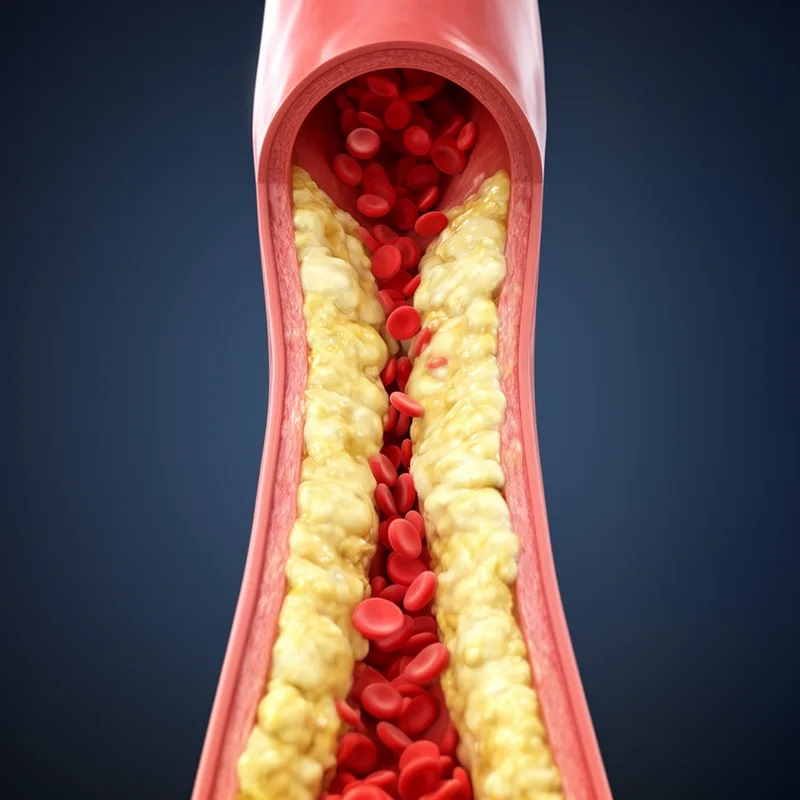
atheromatic
- adjective
- /ˌæθəˈroʊmətɪk/
- Specialized
- The surgeon noted significant atheromatic plaques in the patient's coronary arteries.
Examples
-
Advanced imaging techniques can reveal atheromatic deposits before symptoms appear.
-
Atheromatic changes increase the risk of cardiovascular diseases.
-
The atheromatic condition was alarming.
-
Patients with atheromatic issues need careful monitoring.
-
The surgeon noted significant atheromatic plaques in the patient's coronary arteries.
-
Advanced imaging techniques can reveal atheromatic deposits before symptoms appear.
-
Atheromatic changes increase the risk of cardiovascular diseases.
Synonyms
 1
7.7

Having fatty deposits inside arteries that reduce blood flow

 1
9.1
Artery walls that are thick, hard, and do not stretch well
 1
9.9
Having fatty deposits that make arteries thick and hard
How Atheromatous

Surface Forms
Morphology
Etymology
Atheromatic comes from atheroma, a Greek word that meant 'porridge' because fatty material in arteries looked like a thick paste. So atheromatic describes tissue or arteries that have those fatty, plaque-like deposits.