
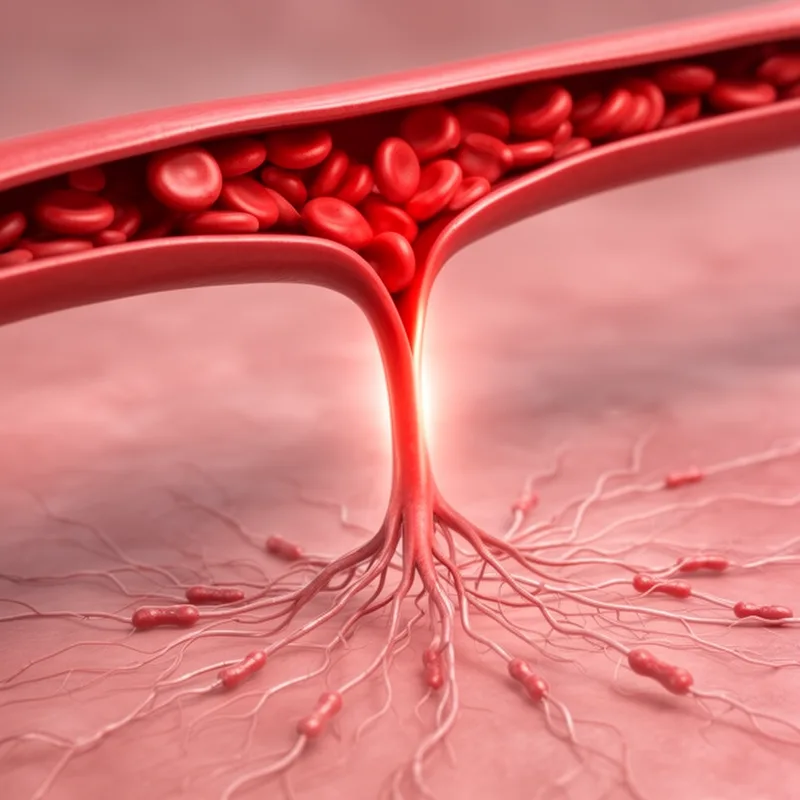
arteriole
 1
7.7
1
7.7

- noun
- /ˌɑːrˈtɪəriˌoʊl/
- Specialized
- During the examination, the surgeon noted the importance of healthy arterioles for proper organ function.
- third-order arteriole
- first-order arteriole
Loading YouTube…
Watch on YouTubeArginine does have the effect of of dilating arterioles and it basically increases blood supply.
- Arginine does have the effect of of dilating arterioles and it basically increases blood supply.
- It has to heat up, but that's from the blood supply coming in from all the blood vessels, the arterioles vasodilating, right?
Examples
-
And that damage is being done each day to the tiny arteries and arterioles that feed your retina.
-
Arterioles play a crucial role in regulating blood flow and pressure within the circulatory system.
-
And eventually those arterioles branch into very fine vessels called capillaries.
-
Arginine does have the effect of of dilating arterioles and it basically increases blood supply.
-
Therefore, with compression, flow in the deeper horizontal running arterioles may now be detected by the LDF.
Academic text (1999) -
Capillaries connect arterioles and venules, and their main function is to interchange chemicals and nutrients between the blood and the surrounding tissues.
Academic text (2011) -
The doctor explained how arterioles branch from arteries to supply blood to capillaries.
Synonyms
A small artery with thin walls that leads to tiny blood vessels called capillaries
A very small thin blood vessel that carries blood into tiny vessels in the tissues
How Small

Surface Forms
Morphology
arteriole = artery (semi-transparent) = arterio + ole
The meaning 'small artery' is straightforward, but the word uses the combining form 'arterio-' and the diminutive suffix '-ole', which may be unfamiliar in form to average learners.
Etymology
Arteriole comes from artery plus the ending -ole, which means 'small'. So an arteriole is a 'small artery' that leads into capillaries.