

argus pheasant
- noun
- Philippine
- Birdwatchers often seek out the elusive argus pheasant because of its beautiful and unique appearance.
Loading YouTube…
Watch on YouTubeThe first person to ever see the first scientist ever to see the display of the Argus pheasant was William Beebe.
- The first person to ever see the first scientist ever to see the display of the Argus pheasant was William Beebe.
Examples
-
In the dense forests of Southeast Asia, the argus pheasant is known for its striking eye-patterned feathers.
-
The first person to ever see the first scientist ever to see the display of the Argus pheasant was William Beebe.
-
The male argus pheasant displays its vibrant plumage to attract a mate during the breeding season.
Synonyms
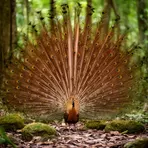
A large bird with long tail feathers that have eye-like spots

A large pheasant from Southeast Asia with showy male feathers

A large bird from Southeast Asia that people keep for bright feathers and beauty
Surface Forms
Morphology
The phrase is a straightforward noun + noun taxonomic compound: the modifier 'argus' specifies which kind of 'pheasant' it is. If a learner knows 'argus' (a patterned pheasant) and 'pheasant' (a gamebird), the overall meaning — a particular, patterned pheasant — is directly derivable, a composition common across languages.
Etymology
Argus pheasant gets its name from an old Greek story. Its feathers have many round spots that look like eyes, so people named the bird after Argus, the 'many-eyed' giant, and the word pheasant simply means a type of bird, which is why the name points to its eye-like patterns.

