
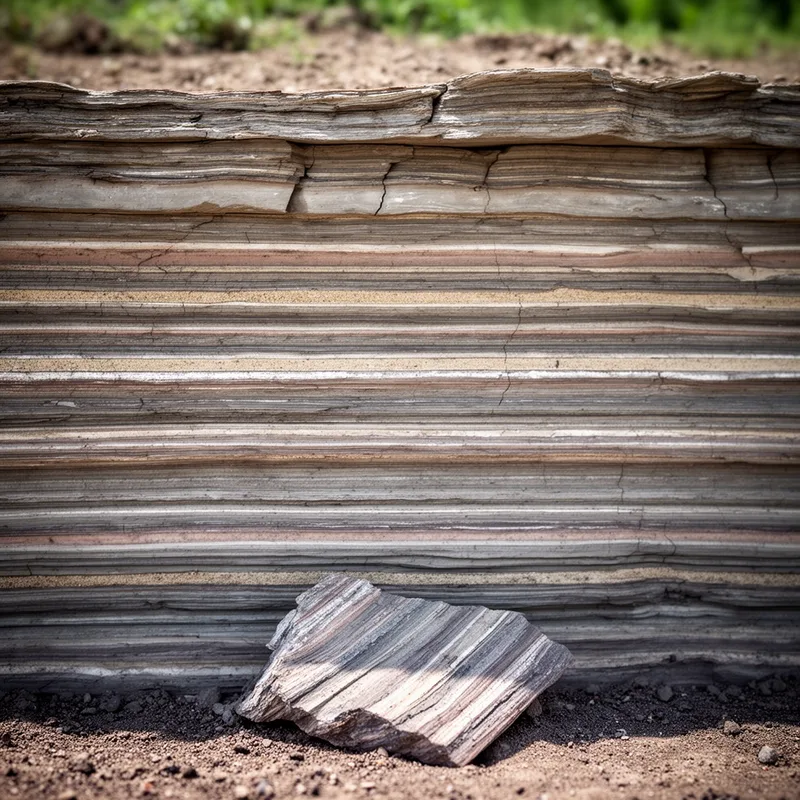
argillaceous rock
- noun
- /ˌɑrɡɪˈleɪʃəs rɑk/
- Specialized
- Water percolates slowly through argillaceous rock, making it nearly impermeable compared to sandy layers.
Examples
-
The hillside consists mainly of argillaceous rock interbedded with thin layers of sandstone.
-
Water percolates slowly through argillaceous rocks, making them nearly impermeable compared to sandy layers.
-
Geologists collected samples from the argillaceous rock formation to study its mineral content.
-
The argillaceous rock formed over millions of years.
-
Many argillaceous rocks can be found in sedimentary layers.
-
Geologists collected samples from the argillaceous rock formation to study its mineral content.
-
The hillside consists mainly of argillaceous rock interbedded with thin layers of sandstone.
Synonyms
 57
5.7
57
5.7

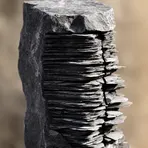
A rock made from clay that splits into thin flat layers

 1
5.5
1
5.5
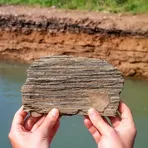
A hard rock that forms when mud or clay presses together and becomes solid
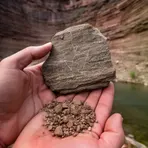
A hard rock made of tiny bits of clay pressed together
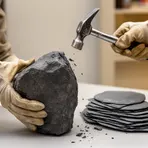
A hard rock made from clay that does not split into thin sheets
How Clayey

Surface Forms
Morphology
The adjective 'argillaceous' means 'containing clay' (or 'clayey'), so combining it with 'rock' yields a directly compositional meaning: a rock composed of clay minerals. This follows a straightforward adjective+noun pattern that a B1 learner who knows both constituents can readily understand, even if the term is somewhat technical.
Etymology
Argillaceous rock comes from the Latin word 'argilla' meaning 'clay', so argillaceous means 'clay-like' and rock means 'rock'. Imagine soft, sticky clay slowly turning into hard stone; that image helps you remember that this term means a rock made mostly of clay, so water does not pass through it quickly.